Orange Marmalade: How To Make The Best In 3 Steps
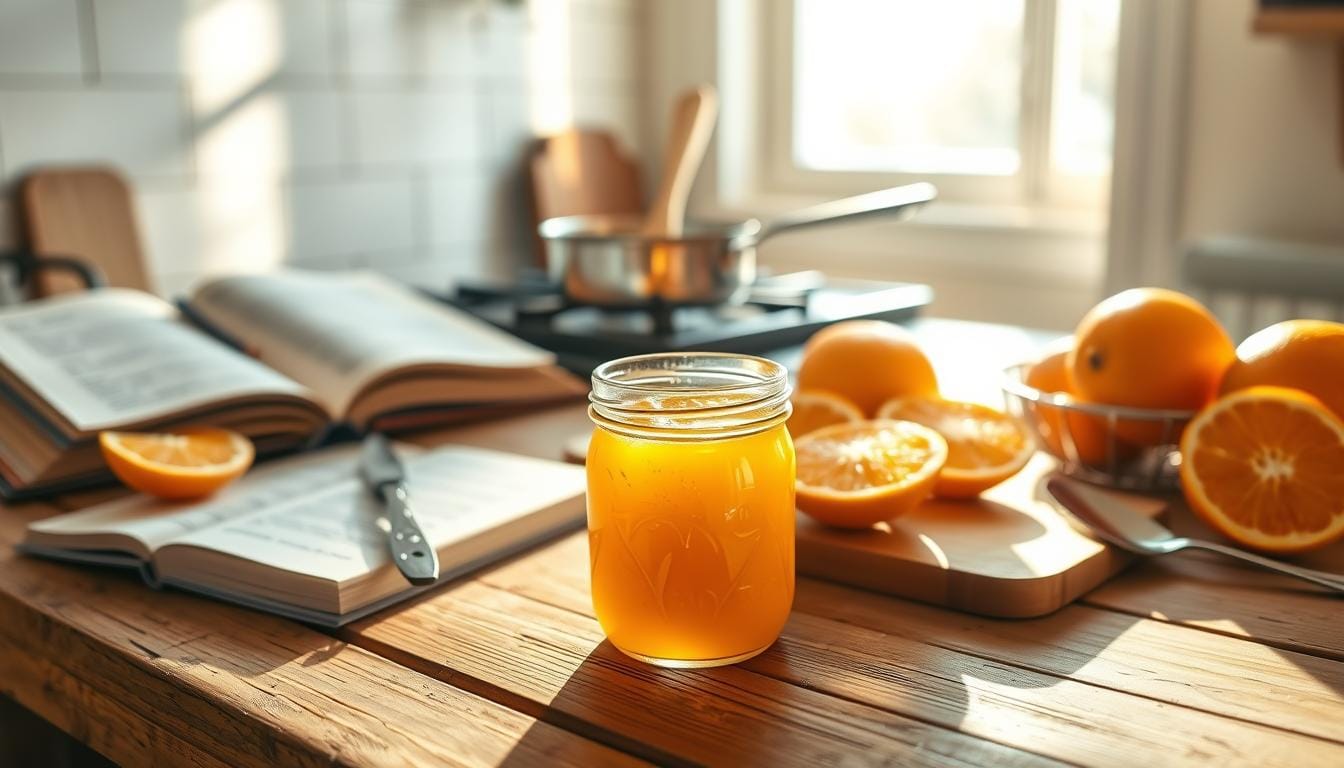
Making homemade orange marmalade is easier than you think. It turns navel oranges into a tasty spread. You can make it in just three simple steps, right in your kitchen.
This traditional method makes a thick, bittersweet preserve. It’s better than anything you can buy. With a few natural ingredients and some patience, you’ll have a spread perfect for breakfast or as a gift.
The beauty of this recipe is its simplicity. By following three steps, you’ll make a preserve that brings out the bright, intense flavors of citrus. You’ll need navel oranges, lemon, water, and sugar to make something truly special.
Key Takeaways
- Discover a simple 3-step orange marmalade recipe
- Use only natural, fresh ingredients
- Create a versatile spread for multiple uses
- Learn traditional preserve-making techniques
- Enjoy a bittersweet homemade marmalade
What Makes Homemade Orange Marmalade Special
Explore the world of citrus marmalade, a spread that’s different from regular fruit preserves. It celebrates the whole citrus fruit, offering a unique taste experience.

Discovering what is marmalade takes you into a world of rich, complex flavors. It turns ordinary oranges into something truly special. The secret lies in its special preparation and ingredients.
Marmalade vs Jam: A Delicious Difference
When you compare marmalade to jam, you’ll find some big differences:
- Texture: Marmalade has bits of citrus rinds, giving it a unique, chunky feel
- Ingredients: It uses the whole citrus fruit – peel, pulp, and juice
- Flavor Profile: It has a perfect mix of sweet and bitter tastes
The Power of Fresh Ingredients
Using fresh, high-quality citrus fruits makes your orange preserve truly special. Fresh oranges add natural pectin, bright flavors, and depth that processed ingredients can’t match.
Choosing ripe, juicy oranges makes your homemade marmalade rich and complex. The natural sugars and oils in fresh fruit give it a sophisticated, intense flavor.
Essential Ingredients for Perfect Orange Marmalade

Making delicious orange marmalade starts with picking the right ingredients. The beauty of this preserve is in its simplicity. It depends on the quality of each part you choose.
For a perfect batch of orange marmalade, you’ll need:
- Navel oranges: 2 large fruits (about 12 oz/340g)
- Lemon: 1 small fruit (about 2 oz/57g)
- Water: 2 cups (16 fl oz/480ml)
- Sugar for preserves: 2 cups (16 oz/454g) granulated sugar
Choose navel oranges that are firm and bright. These oranges are sweet, seedless, and easy to find. The lemon adds brightness and helps the marmalade set right.
Pro tip: Use a kitchen scale for precise measurements. This is key for making the perfect marmalade. You can also try other orange varieties if they’re available.
For a twist, replace the lemon with 2 oz of chopped grapefruit. This small change can add a unique flavor that will surprise you.
Kitchen Tools You’ll Need
Making homemade orange marmalade is easy, even without fancy tools. Just a few basic items can turn fresh oranges into a tasty spread.
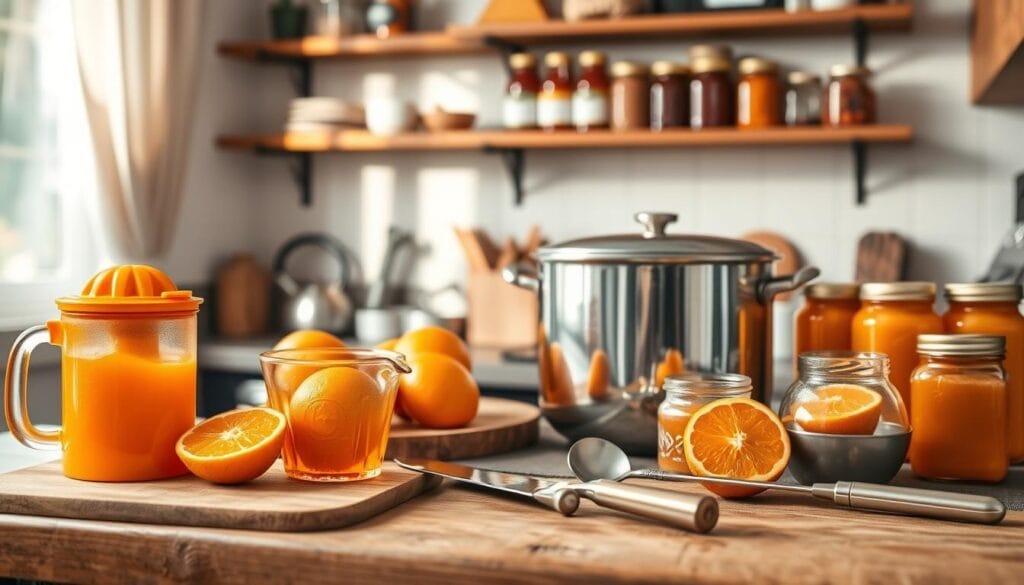
- Medium heavy-bottomed saucepan
- Measuring cups and spoons
- Sharp kitchen knife
- Cutting board
- Wooden spoon
- Clean glass jars for storing
Mastering the Marmalade Doneness Test
Knowing when your marmalade is done is crucial. The cold plate test is a reliable way to check its consistency. Here’s how to do it:
- Place a plate in the freezer before starting
- During cooking, spoon a small amount of marmalade onto the cold plate
- Return the plate to the refrigerator for one minute
- Push the marmalade with your finger
If the marmalade wrinkles and holds its shape instead of running, it’s ready. This test helps you get the perfect gel every time.
Preparing Your Oranges and Citrus

To start making marmalade, first, get your fresh citrus fruits ready. Wash the oranges well to remove dirt and residue. This step is important for the flavor of your marmalade.
Chopping citrus needs careful technique. You want to chop with precision for the right marmalade texture. Here are some tips for chopping your fruit:
- Wash oranges under cool running water
- Pat dry with a clean kitchen towel
- Select a sharp knife for clean cuts
Removing seeds from oranges is key for a smooth marmalade. Take your time during this process. Cut each orange into quarters and remove any visible seeds. Also, trim the white membrane to avoid bitterness.
You have two main chopping techniques:
- Fine chop method: Dice the entire fruit into small, uniform pieces
- Slice method: Cut quarters into thin strips, creating a more rustic texture
The goal is consistency. Whether you like your marmalade smooth or chunky, your chopping method will decide. Try different styles to see what you prefer.
The Overnight Soaking Technique
Making exceptional orange marmalade requires a secret weapon: the overnight soaking method. This technique transforms ordinary citrus into a rich, flavorful spread. It unlocks the fruit’s hidden potential through a patient and precise process.
Why Soaking Time Matters
The overnight soaking technique is crucial for creating the perfect marmalade. During this time, several important processes occur. These processes dramatically improve your final product:
- Softening citrus peel for a tender texture
- Reducing harsh bitter flavors
- Extracting natural pectin for proper setting
- Developing deeper, more complex flavor profiles
Pectin Extraction Explained
When you use the marmalade soaking technique, you’re coaxing out the natural pectin hidden in orange peels and pith. This process allows your marmalade to set naturally without added commercial pectin.
| Soaking Stage | Duration | Key Benefit |
|---|---|---|
| Initial Simmer | 10-15 minutes | Break down fruit structure |
| Overnight Rest | 24 hours | Pectin extraction and flavor development |
By allowing your chopped oranges to rest in water for a full 24 hours, you’ll create a marmalade with remarkable depth and smooth consistency. Patience is truly the secret ingredient in this time-honored preservation technique.
Cooking Your Orange Marmalade to Perfection
Turning soaked citrus into marmalade needs patience and focus. The cooking process is where the magic unfolds. It turns simple ingredients into a rich, vibrant preserve.
Begin by heating your saucepan over medium heat. Bring the mix to a gentle simmer, stirring now and then. As it cooks, the liquid will thicken, intensifying the flavors.
- Maintain medium heat for initial simmering
- Stir occasionally to prevent sticking
- Look for volume reduction by approximately half
When reducing marmalade, sugar is key. Add your granulated sugar and stir until it’s fully dissolved. This step adds sweetness, balancing the citrus’s tartness.
The last step requires your full attention. Turn the heat to medium-high and let it simmer fast. Stir frequently to prevent burning. The mixture will become glossy and thick, with unique bubbles.
Your marmalade is almost ready when it’s rich and glossy. The cooking time is usually 35-60 minutes, depending on your recipe and desired thickness.
Pro Tips for the Best Homemade Marmalade
Making the perfect marmalade is more than just a recipe. A few key tips can make your spread stand out. Let’s explore some expert techniques to boost your citrus preserve skills.
Preventing Burnt Marmalade Like a Pro
It’s key to avoid burnt marmalade for the right consistency. Sugar makes it more likely to burn, so watch your heat closely. Here are some pro tips:
- Use a heavy-bottomed pan for even heat distribution
- Keep your burner on a steady, moderate heat
- Stir frequently, paying extra attention to edges and bottom
- Look for changes in bubble texture and thickness
Creative Marmalade Variations to Explore
After mastering the basics, try new marmalade flavors. Grapefruit marmalade is a great twist on the classic.
- Citrus Fusion: Swap lemon for grapefruit for a richer taste
- Add bourbon for a grown-up version
- Include fresh ginger for a spicy touch
- Blend different citrus for unique flavors
Your homemade marmalade is more than toast. Use it in cookies, puddings, meat glazes, or yogurt for a surprise.
Storing and Using Your Homemade Orange Marmalade
Storing marmalade right is key to keeping its bright flavors. After making your homemade breakfast spread, you’ll want it to stay fresh and tasty for a long time.
Here are the main tips for storing homemade preserves:
- Let the marmalade cool down completely at room temperature
- Put it in clean, airtight glass containers
- Keep it in the fridge for the best shelf life
Your marmalade can last 4 to 6 weeks in the fridge. To keep it fresh, always use clean tools when taking some out. Also, make sure the container is tightly closed.
| Storage Location | Approximate Shelf Life |
|---|---|
| Refrigerator | 4-6 weeks |
| Room Temperature | 7-10 days |
Be creative with your marmalade! It’s not just for toast. Try these ideas:
- Swirl it into yogurt or oatmeal
- Use it as a glaze for roasted meats
- Fill thumbprint cookies
- Spread it on fresh scones
Pro tip: Homemade marmalade is a great gift. Package it in pretty jars with your own labels. It’s a thoughtful, tasty gift that everyone will love.
Conclusion
You’ve learned how to make a simple marmalade recipe. This skill connects you to home cooks from the past. Now, you can make a spread that makes breakfast better and impresses everyone.
This homemade citrus preserve is easy to make. With just four ingredients and some patience, you’ve made a thick, bittersweet orange marmalade. Each jar is a sign of your hard work and creativity in the kitchen.
Keep making marmalade and try new things. Use different citrus fruits and adjust the sweetness. Your skills show that the best recipes are simple, using quality ingredients and time.
See your marmalade as more than a recipe. It’s a skill you’ll use again and again, getting better with time. Your orange marmalade is a delicious part of your cooking journey.
FAQ
Can I use different types of oranges for this marmalade recipe?
Absolutely! You can use any orange variety. Just make sure they are fresh and high-quality. This will give you the best flavor and texture.
How long will homemade orange marmalade last in the refrigerator?
Homemade marmalade will last up to six weeks in the fridge. Store it in an airtight container. Always use clean utensils when serving.
Do I really need to soak the citrus overnight?
Yes! The 24-hour soak is key. It extracts pectin, softens rinds, and reduces bitterness. Skipping this step will affect the marmalade’s quality.
What if I don’t have a candy thermometer?
No problem! Use the cold plate test instead. Chill a plate in the freezer. When testing, place a small amount on the plate. If it wrinkles, it’s ready.
Can I make this marmalade without added pectin?
Yes, you can. This recipe uses citrus peels’ natural pectin. The soak and careful cooking ensure it sets without additives.
What are some creative ways to use orange marmalade?
Use it in thumbprint cookies, as a meat glaze, or in yogurt. It’s also great in baked goods or as a unique gift.
Can I make a smaller or larger batch of marmalade?
Yes, you can adjust the recipe. Just keep the same fruit, water, and sugar ratios for the best results.
How fine should I chop the citrus?
Chop to your liking. Smaller pieces make a smoother marmalade. Larger pieces give a chunky, rustic texture.
Can I add other flavors to my marmalade?
Definitely! Try adding whiskey, bourbon, or fresh ginger. Start with the basic recipe and then get creative.
Is homemade marmalade difficult to make?
Not at all! This recipe is easy. The hardest part is waiting for the overnight soak. If you can chop and stir, you can make great marmalade.