Is Guacamole Healthy? 3 Reasons Dietitians Love It
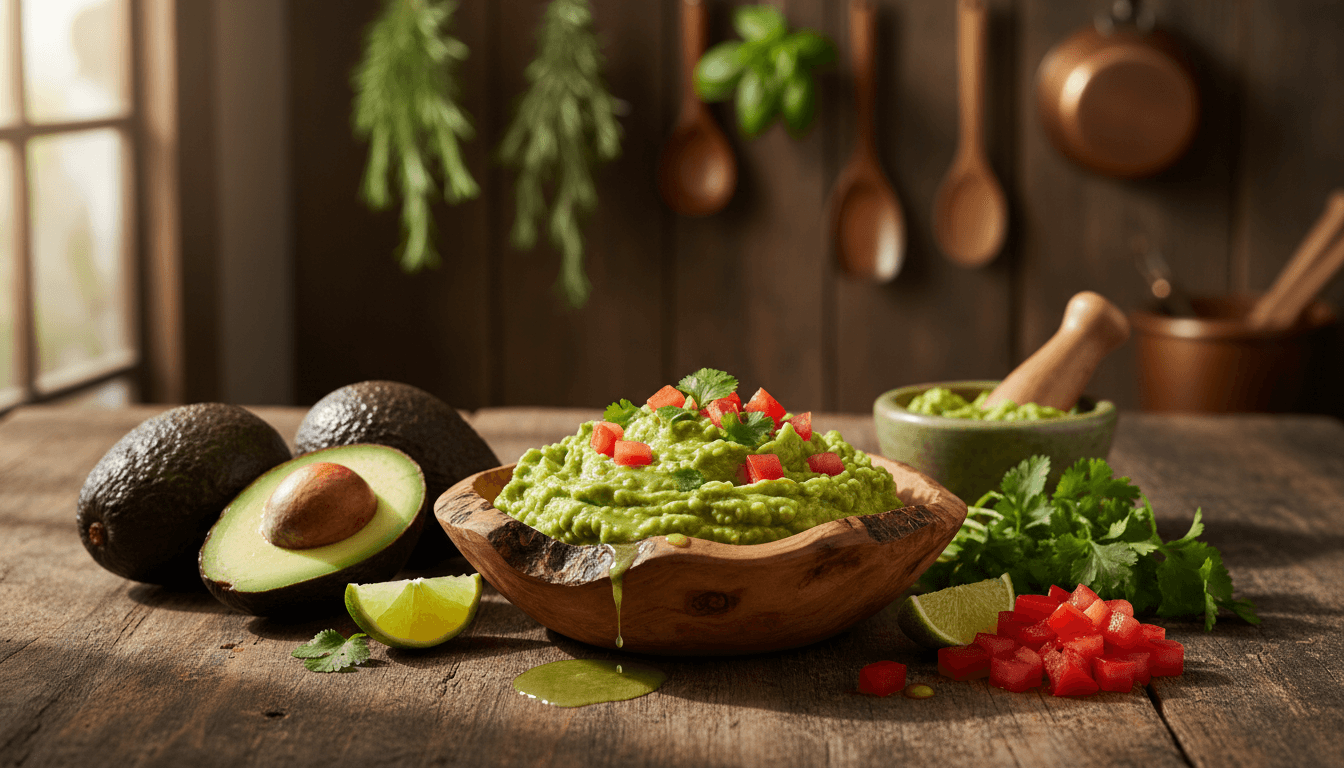
Guacamole has a way of showing up at parties, game nights, and quick weeknight dinners. It tastes rich, so it’s easy to wonder, is guacamole healthy or just a sneaky calorie bomb. The truth sits in the middle: it can be a smart choice, but it depends on how much you eat and what you eat it with.
This avocado dip starts with a whole food that’s packed with unsaturated fat and plant nutrients. That’s why many nutrition pros point to guacamole as one of the easiest dietitian-approved snacks to keep on hand. When it’s made well, it can add flavor and texture without relying on ultra-processed ingredients.
In this article, we’ll break down guacamole nutrition in a clear, U.S.-focused way. You’ll get the benefits of guacamole that dietitians love most: heart-healthy fats, fiber for fullness and gut health, and antioxidants with anti-inflammatory perks. We’ll also cover how ingredients and portions shape healthy guacamole, plus better ways to eat it beyond chips.
If you buy it at the store or order it at a restaurant, details matter. Some versions are higher in sodium or made with added oils and fillers. We’ll show you what to watch for and how to tweak your own batch at home so guacamole fits your routine, not the other way around.
Key Takeaways
- Guacamole can be healthy, but serving size and pairings matter.
- This avocado dip is known for unsaturated fats that support heart health.
- The fiber in guacamole can help you feel full and support gut health.
- Fresh add-ins can boost antioxidants and flavor without much added sugar.
- Guacamole nutrition changes fast with restaurant portions, sodium, and add-ins.
- Healthy guacamole is easiest to control when you make it at home.
What Makes Guacamole a Healthy Choice?
Guacamole tends to earn a “healthy” reputation because it’s built from simple ingredients that fit into real-life eating. As whole-food dips go, it can feel more like food than a processed spread.
It also plays well with many flavors, so it’s easy to use in balanced meals instead of relying on heavier sauces. The key is knowing what’s in it and how much you’re having.
Avocado as the nutrient-dense foundation
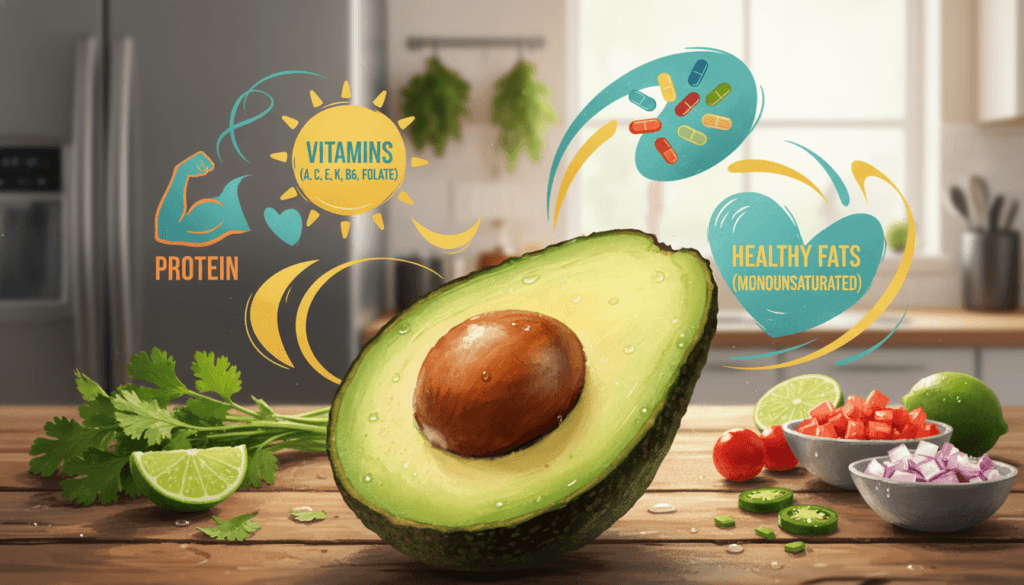
Most of the goodness comes from avocado, a staple among nutrient-dense foods. Avocado nutrition includes fiber and a mix of vitamins and minerals that show up often in U.S. nutrition guidance.
Avocados are also known for healthy fats, mainly unsaturated fat, which can be a smarter swap than dips made with lots of butter, cream, or mayo. That fat also helps guacamole feel satisfying, which matters when you’re building a filling plate.
How whole-food ingredients boost overall quality
Classic guacamole stays close to the source: avocado, lime, onion, tomato, cilantro, jalapeño, and salt. Compared with many whole-food dips on the snack aisle, it typically has fewer additives and less processing.
Those add-ins do more than taste good. Lime brightens flavor, tomatoes and onions add texture, and jalapeño brings heat, so you don’t need as much salt to make it exciting.
| How you use it | What it tends to replace | What that changes |
|---|---|---|
| Spread on a turkey sandwich with tomatoes and greens | Mayonnaise-heavy spreads | Often shifts the fat profile toward healthy fats while adding produce |
| Veggie dip with bell peppers, cucumbers, and carrots | Ranch-style dips | Boosts fiber from vegetables and keeps the snack closer to nutrient-dense foods |
| Topping for a taco bowl with beans, lettuce, and salsa | Queso or sour cream | Can improve overall fat quality and keep the bowl aligned with balanced meals |
| Big bowl with chips, queso, and a sugary margarita | Not a direct swap; it’s an “add-on” pattern | Calories add up quickly, making portion control more important |
Why “healthy” depends on portion and context
Guacamole is calorie-dense because avocado is energy-dense. That’s not a flaw, but it makes portion control part of the deal, especially if chips are the main vehicle.
Context matters, too. A few spoonfuls can round out balanced meals when there’s also protein and fiber-rich carbs or vegetables on the plate.
If guacamole replaces queso or creamy dips, it can be a practical upgrade. If it stacks on top of other rich foods, the “health” label depends on the full spread, not one bowl.
Guacamole Nutrition Basics: Calories, Macros, and Micronutrients
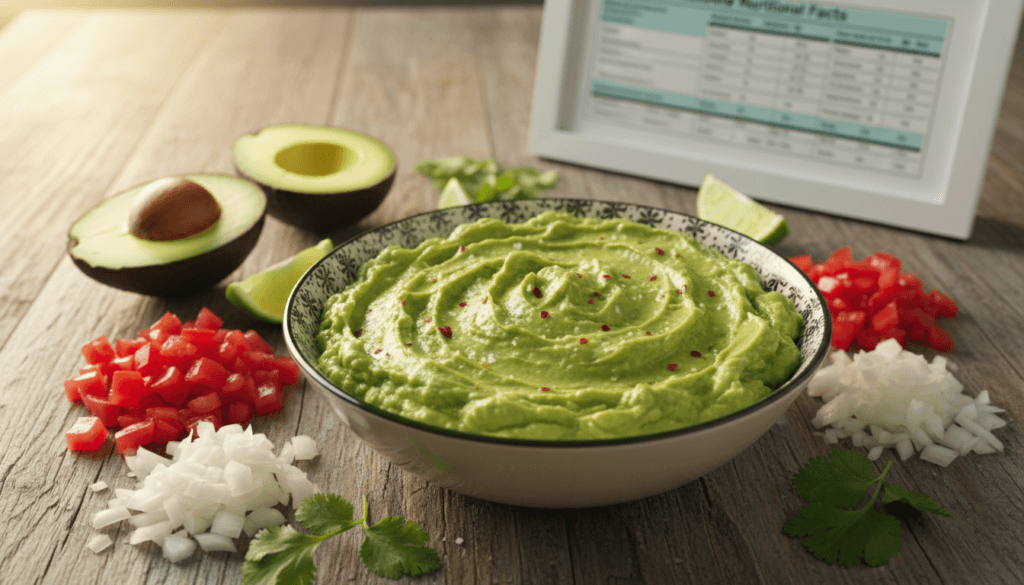
Guacamole can look simple, but its nutrition can shift fast based on how it’s made and how much ends up on your plate. The easiest way to stay grounded is to watch guacamole serving size, then scan the label or menu when it’s available.
Typical calories and serving sizes
On many U.S. packages, a guacamole serving size is often listed as 2 tablespoons. In real life, people may scoop closer to 1/4 to 1/2 cup, especially with chips or tacos.
That’s why guacamole calories can feel “surprising” on busy snack plates. The macros also vary by recipe, since add-ins like extra oil, sour cream, or cheese change the total and can raise the calorie count.
| Portion you might see | How it’s commonly used | What shifts most |
|---|---|---|
| 2 tablespoons | A thin layer on toast or a small taco | Helps keep guacamole calories modest; macros stay closer to avocado-only recipes |
| 1/4 cup | A side for a burrito bowl or salad | More filling; fat and fiber become more noticeable in the macros |
| 1/2 cup | A shared dip bowl or loaded nachos | Total guacamole calories rise quickly, especially if the recipe includes dairy or added oil |
Healthy fats vs. saturated fat concerns
Classic guacamole is known for being rich in unsaturated fat, mainly from avocado. This is the type of fat many people aim for when building a heart-smart plate.
Saturated fat is usually lower in a basic recipe, but it can climb when guacamole is mixed with cheese, sour cream, or served with heavy toppings. Restaurant portions can also be larger, so checking posted nutrition can help you compare choices.
Key vitamins and minerals to know
Guacamole brings more than fat to the table. Avocado is a steady source of potassium, plus folate and vitamin E, which support everyday nutrition goals in a simple, familiar food.
You may also get vitamin K, and smaller amounts of vitamin C and magnesium depending on ingredients like lime, tomato, and onion. Sodium is often the main watch-out, especially in packaged tubs and restaurant bowls where salt levels can add up fast.
Guacamole
Guacamole can be simple or packed with extras, and that choice changes both taste and nutrition. Knowing what’s in the bowl helps you spot traditional guacamole versus versions that lean more like a creamy dip.
What traditional guacamole includes
Traditional guacamole starts with ripe avocado for a creamy texture, plus fiber and heart-friendly fat. Lime juice adds brightness and helps slow browning, so the flavor stays fresh.
Classic, authentic guacamole ingredients often include onion, cilantro, and jalapeño for crunch, aroma, and plant compounds. Tomato is common for extra volume, hydration, and vitamin C, while salt is the main driver of sodium and brings the flavors into focus.
Common add-ins that change the nutrition
Guacamole add-ins can be great, but they shift the numbers fast. A splash of oil can make it silkier, yet calories add up quickly with just a small pour.
Stirring in sour cream, cream cheese, or mayo boosts richness, but it also raises saturated fat and changes the feel from spread to dip. Cheese can add protein and calcium, though it often bumps up sodium and saturated fat at the same time.
Fruit like mango or pineapple brings sweetness and color, plus extra carbs and natural sugar. Beans or plain Greek yogurt can make it more filling, with more protein and, depending on the bean, more fiber too.
| Ingredient move | What it changes | Nutrition shift | Best use |
|---|---|---|---|
| Extra lime + tomato | Brighter flavor, more volume | More vitamin C and hydration, little calorie change | When you want a bigger serving without feeling heavy |
| Added oil | Smoother, richer mouthfeel | Calories rise quickly; fat increases even in small amounts | When guacamole is used as a drizzle or sauce |
| Sour cream or mayo | Creamier, milder taste | More saturated fat; can push it toward “dip” territory | When serving with crunchy veggies and watching portions |
| Beans or plain Greek yogurt | Thicker, more filling | Higher protein; beans can add fiber too | When making a snack that holds you over longer |
Restaurant vs. homemade differences
Restaurant guacamole often comes in larger portions and may use more salt than you’d add at home. Some kitchens also blend in oil to keep it smooth and consistent during a busy service.
Homemade guacamole gives you control over sodium, texture, and serving size. It also makes it easier to stick to authentic guacamole ingredients—or to choose guacamole add-ins on purpose, not by default.
It’s also worth noting that some “guacamole” products are avocado-based dips made with stabilizers to help with color and shelf life. Label details matter, and they can change what you’re really getting in each scoop.
Reason Dietitians Love It: Heart-Healthy Unsaturated Fats
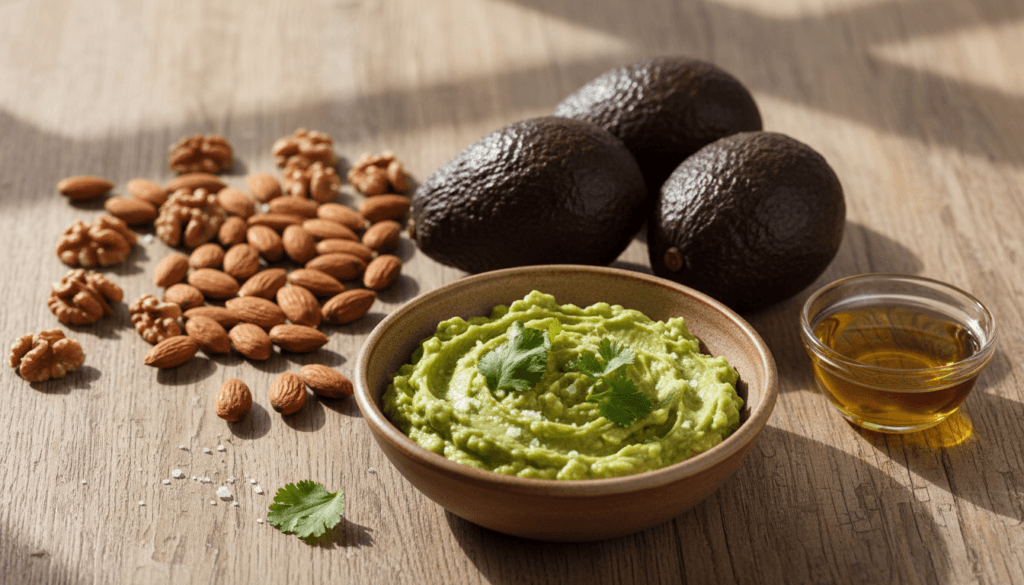
Guacamole does more than add flavor. It can upgrade the fat quality of a meal in a simple, familiar way. When it replaces butter, creamy sauces, or mayo-heavy spreads, you get more heart-healthy fats without changing the whole menu.
Monounsaturated fats and cardiovascular benefits
Avocados bring monounsaturated fat, the type often featured in Mediterranean-style eating. U.S. nutrition guidance commonly supports swapping saturated fat for unsaturated fat as a practical heart move. In real life, that can look like adding a measured scoop of guac instead of a thick layer of cheese sauce or a buttery topping.
Guacamole also plays well with other whole foods. Pair it with vegetables and lean proteins, and the meal tends to feel satisfying with fewer “extra” add-ons. That’s one reason dietitians keep it in the regular rotation.
How guacamole can support better cholesterol patterns
Food doesn’t change cholesterol overnight, but patterns matter. Meals built around monounsaturated fat, fiber, and produce can support healthier LDL trends over time. That same eating style can also help maintain HDL in a range your clinician is aiming for.
Think in swaps: guacamole on whole-grain toast instead of a mayo spread, or guac in a bowl instead of a cream-based dressing. Those small changes can shift the balance of LDL and HDL in a better direction as part of an overall steady routine.
Pairing ideas that keep meals balanced
Dietitians often treat guacamole as a “connector” food. It adds richness, so you can keep the rest of the plate simple. These healthy snack pairings and meal combos help avoid turning guac into a chip-only situation.
- Protein: grilled chicken, turkey, beans, tofu, eggs, or Greek yogurt on the side
- Fiber-rich carbs: corn tortillas in reasonable portions, whole-grain toast, brown rice, or quinoa
- Vegetables: bell peppers, cucumbers, jicama, carrots, or a salad bowl base
| Goal | Balanced plate idea | Where guacamole fits |
|---|---|---|
| Quick lunch | Salad bowl with romaine, bell peppers, black beans, and brown rice | Use guac as the creamy element to add heart-healthy fats |
| High-protein breakfast | Two eggs with tomatoes and whole-grain toast | Spread a small serving for monounsaturated fat instead of butter |
| Smart snack | Cucumbers and carrots with a side of Greek yogurt | Dip veggies in guac for healthy snack pairings that feel filling |
An easy win is the “half-quarter-quarter” setup: 1/2 non-starchy veggies, 1/4 protein, 1/4 high-fiber carbs, plus a measured serving of guacamole for flavor. That framework supports steady energy and keeps Mediterranean-style eating realistic on a busy day.
Reason Dietitians Love It: Fiber for Fullness and Gut Health
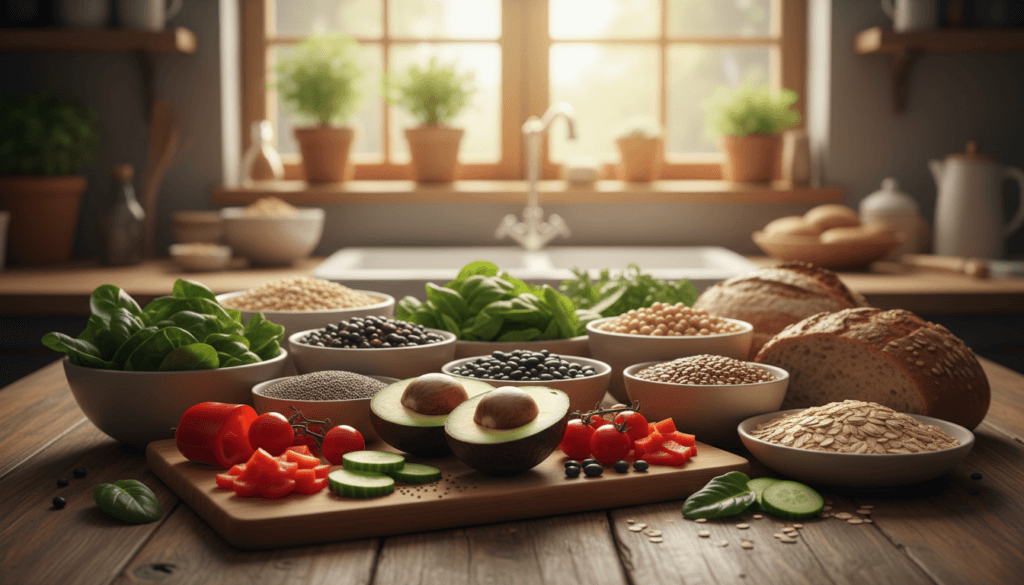
Guacamole brings real staying power to snack time. Its fiber, plus healthy fat, can slow digestion and support satiety, which helps curb grazing between meals. That’s why it often fits into plans built around healthy dips for weight management.
How fiber supports satiety and weight management
When guacamole replaces low-fiber chips-and-dip habits, it can make a snack feel more complete. Pair it with crunchy produce or beans and you add more fiber and volume without turning it into a huge portion.
Guacamole is still calorie-dense, so serving size matters. A small scoop can support satiety just as well as a larger one, especially when it’s part of a plate with vegetables and whole grains.
Digestive health and the gut microbiome connection
Gut health isn’t only about “regularity.” Dietary fiber also feeds beneficial bacteria, which helps shape the microbiome over time. The mix of plant foods you eat matters, so guacamole works best when it’s paired with more plants, not just one dipper.
Some people feel bloated with large amounts of avocado, onion, or garlic. If you’re sensitive, keep portions smaller, go easy on raw onion, and choose simpler flavors while your digestion settles.
Best high-fiber pairings for guacamole
To turn guacamole into one of your go-to high-fiber snacks, think beyond tortilla chips. These pairings add crunch, color, and more fiber without much fuss.
- Veggie dippers: jicama sticks, celery, carrots, snap peas
- Bean-based meals: black bean bowls, lentil salads
- Whole grains: whole-grain crackers (measured portions), whole-wheat pita wedges
| Pairing idea | How it supports satiety | Gut health and microbiome angle | Easy portion cue |
|---|---|---|---|
| Jicama sticks + guacamole | Crunch and water content make a small scoop feel bigger | Adds plant variety and fiber that supports gut health | 1 cup sticks + 2–3 tbsp guacamole |
| Carrots and snap peas + guacamole | Steady bite-to-bite pace helps satiety register | More plant types can help a more resilient microbiome | 2 handfuls veggies + 2 tbsp guacamole |
| Black bean bowl with guacamole | Protein and fiber work together for lasting fullness | Beans are a classic fuel source for beneficial gut bacteria | 1/2 cup beans + 2 tbsp guacamole |
| Lentil salad with a guacamole dollop | Dense texture supports satiety without needing a large serving | Legumes add fermentable fibers that support gut health | 1 cup salad + 1–2 tbsp guacamole |
| Whole-wheat pita wedges + guacamole | Whole grains help slow digestion and reduce mindless snacking | Grain fibers add diversity that can benefit the microbiome | 1 small pita + 2 tbsp guacamole |
| Whole-grain crackers + guacamole | Measured servings keep calories in check for healthy dips for weight management | Whole grains contribute additional fiber alongside avocado | 8–10 crackers + 2 tbsp guacamole |
Reason Dietitians Love It: Antioxidants and Anti-Inflammatory Compounds
Guacamole does more than add flavor. It brings antioxidants to the table in a simple, whole-food way. Think of it as one of those anti-inflammatory foods that fits easily into real meals.
Carotenoids, vitamin E, and other protective nutrients
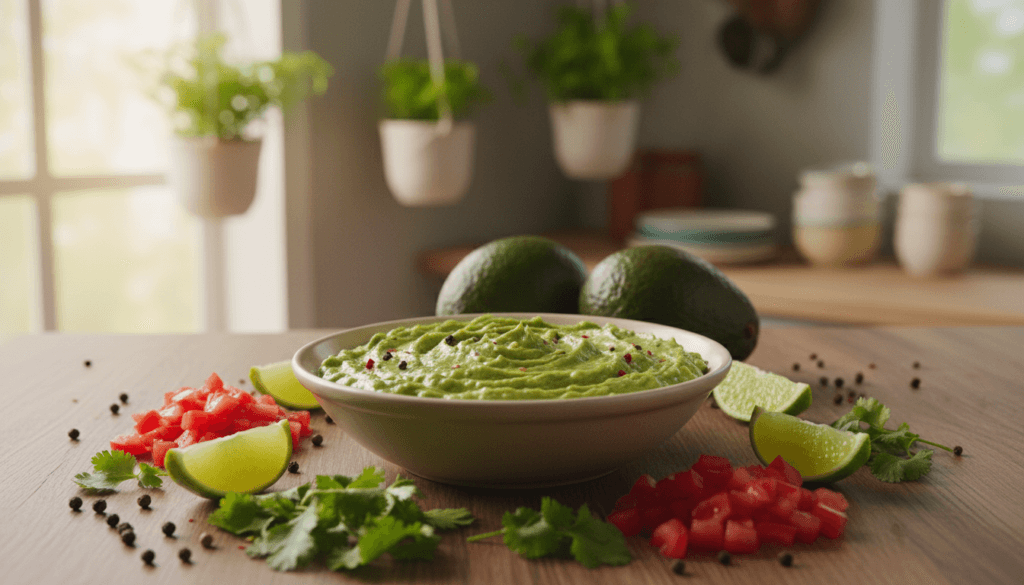
Avocado supplies vitamin E, a fat-soluble nutrient that helps protect cells from everyday stress. It also contains carotenoids, the pigments tied to eye and skin support. Along with fiber and minerals, these compounds add to guacamole’s steady nutrition profile.
Many of these benefits come from phytonutrients, the natural chemicals plants make for self-defense. On your plate, they work as part of a larger healthy eating pattern, not as a quick fix.
Why adding tomatoes, onions, and cilantro can help
Classic mix-ins widen the range of antioxidants. Tomatoes bring vitamin C and lycopene, a standout among carotenoids. Onions add sulfur compounds and flavonoids, while cilantro contributes more phytonutrients through its polyphenols.
Easy tweaks can raise the payoff without changing the vibe: add extra diced tomato, pile on cilantro, and finish with a squeeze of lime. Pair it with colorful produce like bell peppers, cucumber, or jicama for even more variety.
How fat improves absorption of some nutrients
Guacamole is also a “nutrient delivery” food. The avocado’s fat supports nutrient absorption of fat-soluble compounds, including vitamin E and several carotenoids. That matters most when guacamole shows up next to vegetables, since it can help your body use more of what’s on the plate.
This is one reason guacamole fits naturally with anti-inflammatory foods like crunchy veggies, beans, and leafy greens. It helps meals feel satisfying while boosting the mix of phytonutrients you get over the day.
| Guacamole ingredient | Key antioxidants and phytonutrients | How to use it for better nutrient absorption | Simple, realistic upgrade |
|---|---|---|---|
| Avocado | vitamin E; carotenoids | Its natural fat helps nutrient absorption of fat-soluble nutrients in the meal | Mash a ripe avocado and keep added salt modest so the flavor stays clean |
| Tomato | Vitamin C; lycopene (a carotenoid) | Combine with avocado for easier uptake of lycopene and other carotenoids | Use extra chopped tomato for a brighter, fresher scoop |
| Onion | Sulfur compounds; flavonoids | Adds plant compounds without changing the fat balance that supports nutrient absorption | Rinse chopped onion briefly if you want a milder bite |
| Cilantro | Polyphenols and other phytonutrients | Stirs in more plant variety, especially when eaten with vegetables | Add a generous handful and chop it fine for even flavor |
| Lime juice | Vitamin C and other antioxidants | Acid supports flavor so you can rely less on salt while keeping meals veggie-forward | Squeeze right before serving to keep the taste lively |
Is Guacamole Good for Weight Loss?
Guacamole for weight loss can work well when you treat it like a rich accent, not a free-for-all. It has fiber and fat, which can help you feel steady after you eat. The catch is calorie density, so small scoops can add up fast.
Why fat can be helpful for satisfaction
Dietary fat slows digestion and helps meals feel more filling. That can make it easier to stick with mindful eating, especially when lunch runs long or stress hits. Guacamole also makes plain foods taste better, so vegetables and lean proteins feel less like a chore.
It helps to pair it with high-volume foods like bell peppers, cucumber, or a big salad. That combo supports fullness without leaning on ultra-processed foods for crunch or flavor.
Portion guidance that feels realistic
Start with 2 tablespoons if guacamole is part of a larger meal. Use 1/4 cup for a more substantial snack, then adjust based on the rest of your plate. If you already have cheese, nuts, or oil in the meal, a smaller portion size often feels just right.
A simple habit: scoop guacamole into a small bowl instead of eating from the container. That small pause supports mindful eating and helps you notice when you’re satisfied.
| How you use it | Portion size | What it fits best with | Why it helps |
|---|---|---|---|
| Flavor boost on meals | 2 tablespoons | Tacos with beans, grilled chicken, or a veggie bowl | Manages calorie density while adding creaminess and staying power |
| More filling snack | 1/4 cup | Crunchy vegetables, salsa, and a piece of fruit | Supports steady appetite and makes healthy snacks feel satisfying |
| DIY nacho plate | 2 tablespoons to 1/4 cup | Measured tortilla chips, lots of peppers, tomatoes, and black beans | Keeps the fun while guiding portion size and adding fiber |
Snack swaps that reduce ultra-processed foods
If weight goals matter, the biggest win is substitution. Use guacamole to replace queso, ranch, or mayo-based dips, which can drive calories without much fullness. This shift can also cut back on ultra-processed foods that are easy to overeat.
- Chips → crunchy vegetables or roasted chickpeas with a small scoop of guacamole
- Creamy dip → guacamole with salsa for a brighter, lighter mix
- Takeout nachos → a DIY plate with measured chips, extra veggies, beans, and guacamole on the side
Guacamole and Blood Sugar: Is It Diabetes-Friendly?
Many people like guacamole because it feels rich, yet it can fit into a steady routine. When you keep portions in check, it often supports steadier blood sugar than dips built on sugar or refined starch. For many eaters, this makes the question “is guacamole diabetes friendly?” worth a closer look.
Low-carb, high-fat balance and glycemic impact
Guacamole is usually a low-carb dip made from avocado, lime, and salt, plus vegetables like tomato and onion. It also brings fiber and unsaturated fat, which can slow digestion. That combo may help soften glucose swings when you eat it with carbs.
It’s not a free pass to pile on chips, though. What you dip and how much you eat still matters for blood sugar, especially if the rest of the meal is heavy in refined carbs.
Smart ways to build a blood sugar-friendly plate
Think in terms of a balanced plate for diabetes: non-starchy vegetables, a lean protein, and a modest carb portion. Use guacamole as the flavor booster and fat source, not the main event. This approach tends to work better than labeling any one food as “good” or “bad.”
Practical meal ideas that keep the carb load more predictable:
- Taco salad with romaine, grilled chicken, black beans, salsa, and a scoop of guacamole
- Lettuce-wrap tacos with turkey, sautéed peppers, onions, and guacamole
- Breakfast plate with eggs, sautéed spinach or peppers, and guacamole on the side
If you track numbers, test your response to different pairings. Some people do fine with beans or whole grains, while others need smaller portions to keep blood sugar in range.
Best dippers beyond chips
Swapping chips for crunchy produce turns guacamole into one of the easiest low glycemic snacks. It also adds volume, hydration, and extra fiber without a big carb hit.
| Dipper option | Why it works with guacamole | Tip for a balanced plate for diabetes |
|---|---|---|
| Cucumber rounds | High water content and very low starch; keeps the dip feeling light | Add tuna, salmon, or cottage cheese for protein |
| Bell pepper strips | Crunchy, sweet flavor with fewer carbs than chips | Pair with turkey slices or a handful of nuts |
| Celery sticks | Strong crunch and lots of volume for fewer carbs | Serve with a hard-boiled egg to steady blood sugar |
| Jicama sticks | Crisp and mildly sweet; often easier on glucose than chips | Add grilled shrimp or chicken for a fuller meal |
| Cherry tomatoes | Juicy and bright; makes the dip feel fresher and more filling | Include a side salad with olive oil and vinegar |
| Roasted cauliflower “bites” | Warm, savory dipper that replaces starchy sides | Round it out with tofu, fish, or lean beef |
| Small portion of whole-grain crackers | Works when you want a classic snack, with more fiber than white crackers | Measure a serving and add a protein like Greek yogurt dip or jerky |
Personal needs vary. If you use insulin or diabetes meds, check with your clinician and monitor blood sugar after new meals to see what works best for you.
Healthy Ways to Eat Guacamole (Beyond Tortilla Chips)
If you want more ways to eat guacamole, treat it like a flavor booster, not just a dip. The texture makes it easy to build meals that feel filling without needing a pile of chips.
For simple healthy guacamole ideas, spread a thin layer on whole-grain toast, then add sliced tomato and a hard-boiled egg. It’s quick, savory, and steady enough to carry you to lunch.
Guacamole also shines as one of the easiest avocado spread alternatives to mayonnaise. Stir it into a tuna salad, swipe it on a turkey sandwich, or use it in a wrap with crunchy lettuce and peppers.
When you want hearty guacamole meals, add a scoop to chili, black bean soup, or a turkey taco bowl. The cool, creamy bite balances heat and adds richness without needing extra cheese.
For weeknight tacos, try grilled fish or shrimp with cabbage slaw and lime. Finish with fresh guacamole toppings like diced onion, cilantro, or extra tomato for a bright, crisp contrast.
- Toast: thin spread + tomato + egg for a lighter start
- Bowls: about 1/4 cup on beans, chicken, tofu, or veggies for a fuller plate
- Parties: make guacamole the centerpiece with a veggie tray (snap peas, carrots, cucumbers, bell peppers)
- Comfort food: spoon over baked potatoes or sweet potatoes with salsa
A “balanced bite” helps guacamole work harder: pair it with protein and fiber, like beans, chicken, tofu, and vegetables. That combo keeps the meal satisfying, especially when refined chips aren’t the main event.
| Use | How to build it | Portion cue | What it adds |
|---|---|---|---|
| Whole-grain toast | Toast + guacamole + tomato + hard-boiled egg | Thin spread (about 1–2 tbsp) | Creamy texture, steady energy, more staying power |
| Soup or chili | Black bean soup or chili + guacamole + diced onion | 1/4 cup dollop | Cools spicy flavors and makes each bite richer |
| Sandwich or wrap | Turkey or veggie wrap + guacamole instead of mayo | 1–2 tbsp swipe | Moisture and flavor with fewer processed ingredients |
| Seafood tacos | Grilled fish or shrimp + cabbage slaw + guacamole | 2–3 tbsp per taco | Fresh contrast and a satisfying finish |
| Baked potato night | Sweet potato + guacamole + salsa + black beans | 1/4 cup scoop | Turns a side into a full, cozy meal |
Guacamole Ingredients to Watch: Sodium, Additives, and Extras
Guacamole can look simple, but the details matter. A quick scan of store-bought guacamole ingredients can tell you if you’re getting mostly avocado or a long list of extras.
Salt levels in store-bought and restaurant options
Salt can climb fast in restaurant batches and packaged tubs, especially when chips and salsa are also on the table. The tricky part is serving size: a label may list 2 tablespoons, but most people eat more than that, which can turn it into high sodium guacamole.
Compare a few brands and note sodium per serving and how many servings are in the container. If you’re watching blood pressure, choose options with moderate sodium and a short ingredient list.
Hidden oils, fillers, and preservatives
Some products add avocado oil or other oils to smooth texture and stretch the batch. Others use starches, gums, or additives to keep it thick and green. Preservatives can also show up to slow browning and extend shelf life.
These aren’t automatically “bad,” but they can change calories, salt, and how whole-food the dip feels. If heart health or calorie goals matter to you, aim for avocado-forward tubs with minimal added oils and fewer extras.
| What you might see | Why it’s added | What to watch for |
|---|---|---|
| avocado oil | Richer mouthfeel and smoother blending | More calorie density per scoop if oil is high on the list |
| additives (gums, starches) | Stabilizes texture and reduces separation | Less avocado per bite; may shift the “fresh” taste |
| preservatives | Helps slow browning and extends fridge life | Often paired with higher sodium; check the label closely |
How toppings like cheese and sour cream change nutrition
Extras can turn guacamole from a light topping into a heavier dip. Cheese can raise saturated fat and sodium, and sour cream guacamole often brings a richer texture with more saturated fat than classic recipes.
Seasoned packets, bacon bits, or salty mix-ins can push sodium even higher. If you like a creamy taste, try using a smaller amount of the add-in and keep the base mostly avocado so the flavor stays bold without the pile-on.
Homemade vs. Store-Bought Guacamole: Which Is Healthier?
When people debate homemade guacamole vs store-bought, “healthier” depends on what you need most: lower sodium, fewer additives, fewer steps, or less food waste. Homemade lets you control salt and keep the ingredient list simple. Store options can still fit a balanced diet when you choose healthy packaged guacamole with a strong label.
Label-reading tips for packaged guacamole
If you want the best store-bought guacamole for your goals, learn how to read labels like a quick checklist. Start with serving size, then check servings per container, since many tubs are more than one sitting.
- Scan ingredients first: avocado should be listed first; watch for added oils and added sugars.
- Compare sodium: look at sodium per serving and also what you’d eat in a real scoop.
- Check calories and saturated fat: helpful if weight goals matter or you’re watching heart health.
Freshness, flavor, and nutrition tradeoffs
Homemade guacamole vs store-bought often comes down to taste and timing. Homemade has bright flavor, easy customization, and no stabilizers, but it can brown fast and takes prep time. Packaged versions stay consistent and are ready on demand, yet some use stabilizers and higher sodium to hold color and shelf life.
| What matters | Homemade guacamole | Store-bought guacamole |
|---|---|---|
| Ingredient control | Full control over salt, spice, and mix-ins | Depends on the brand; better options keep the list short |
| Sodium range | Easy to keep low by seasoning lightly | Can be higher; check the label for a realistic portion |
| Freshness window | Best right after mixing; browns sooner without preservatives | Stays green longer; may include acids or stabilizers |
| Food waste | Ripe avocados can spoil fast if plans change | Single-serve cups can help small households waste less |
Budget-friendly shortcuts that keep it wholesome
If time is the barrier, avocado shortcuts can keep your bowl simple without turning it into a project. Thaw frozen avocado chunks and mash with lime and salt, or use pre-chopped onion and cilantro to cut prep.
Another quick route is mashed avocado mixed with jarred salsa, plus lime for brightness; this can be a smart compromise when you still want healthy packaged guacamole vibes at home. If you buy fresh avocados, choose mixed ripeness so one is ready today and another holds for later.
How to Make Guacamole Healthier at Home
Healthy homemade guacamole is easy to tune to your taste and your goals. A few smart swaps can boost flavor, add nutrients, and keep texture creamy. The best part is that it still feels like the classic dip.
Simple ingredient upgrades for more nutrients
Start with ripe avocados, then build volume with chopped tomato, cilantro, and diced bell pepper. These add crunch and color, plus helpful vitamins. They also make each scoop feel bigger without piling on extra calories.
For high-protein guacamole ideas, stir in rinsed black beans or add a side of seasoned beans as a topper. You’ll get more fiber and staying power, so it works better as a mini-meal. Keep portions realistic since add-ins can make it easy to keep snacking.
- Flavor lift: extra lime juice, minced jalapeño, and a pinch of cumin
- More texture: finely diced onion and tomato, mixed in right before serving
- Heartier bowl: black beans or corn, folded in gently
Ways to lighten it up without losing flavor
If you want low sodium guacamole, cut salt slowly instead of all at once. Lime, garlic, cilantro, and peppers bring plenty of punch. A little salt can still fit, but the goal is to let fresh ingredients carry the taste.
Another easy move is to fold in finely diced veggies, like cucumber or extra tomato, to increase volume per bite. If you like a tangy note, a spoonful of plain Greek yogurt can add creaminess, but it will change the flavor and make it taste less “pure avocado.”
| Change | What it does for flavor | Nutrition impact | Best use |
|---|---|---|---|
| More lime + jalapeño | Brighter, sharper, more heat | Adds vitamin C with minimal calories | When reducing salt |
| Add tomato, cilantro, peppers | Fresh, crunchy, more aroma | More micronutrients and volume per serving | Everyday healthy homemade guacamole |
| Mix in black beans | Earthy, hearty, thicker | Supports high-protein guacamole ideas with extra fiber | Snack that doubles as lunch |
| Optional Greek yogurt | Tangy, creamy, slightly lighter avocado taste | Adds protein; changes texture and mouthfeel | Dip for veggies or wraps |
Food safety and storage tips to prevent browning
Good guacamole storage starts with time and temperature. Refrigerate promptly, especially after parties, and don’t let it sit out for long stretches. If it smells off or shows mold, toss it.
To prevent guacamole browning, limit air contact. Press plastic wrap directly onto the surface, then seal with an airtight lid. Lime juice can help slow color change, while keeping the pit in the bowl is less reliable than blocking oxygen.
Conclusion
So, is guacamole healthy? For most people, it can be a smart pick. The core guacamole benefits come from avocado’s unsaturated fats, plus fiber and antioxidants from fresh add-ins like tomato, onion, and cilantro.
The key is how it fits on your plate. For everyday healthy eating tips in the U.S., pair guacamole with crunchy veggies, beans, eggs, chicken, or fish. It also works well as a swap for mayo, creamy dressings, or cheese dips, which can cut back on saturated fat.
Keep an eye on salt when you buy it or order it out. Many packaged tubs and restaurant bowls use more sodium than you’d add at home, so taste first and season lightly. These simple dietitian tips help you keep the flavor while staying in control.
Most of all, think in guacamole portions, not endless scoops. Start with a few tablespoons, then build a balanced meal around it. When you do that, guacamole stays a fresh, filling way to eat more whole foods.
FAQ
Is guacamole healthy or fattening?
Guacamole can be a healthy choice, but it’s calorie-dense because avocado is energy-dense. It’s most helpful when you stick to a realistic portion and use it to replace dips like queso, ranch, or mayonnaise-based spreads.
What are the main nutrition benefits of guacamole?
Guacamole is known for heart-healthy unsaturated fats, plus fiber that supports fullness and digestion. It also brings micronutrients like potassium, folate, vitamin E, and vitamin K, along with antioxidants from ingredients like tomato, lime, onion, cilantro, and jalapeño.
What’s a healthy serving size of guacamole?
A common label serving is 2 tablespoons, but many people eat more without noticing. For most meals, 2 tablespoons to 1/4 cup is a practical range, depending on what else is on your plate and how many tortilla chips or crackers you’re having with it.
Is guacamole good for heart health and cholesterol?
Guacamole is typically higher in monounsaturated fat and lower in saturated fat, which supports heart health when it replaces foods like butter or creamy sauces. Over time, meals built around unsaturated fats and fiber can help support healthier LDL cholesterol as part of an overall balanced eating pattern.
Is guacamole good for weight loss?
It can be, because the fat and fiber can make snacks and meals feel more satisfying. Guacamole tends to work best for weight goals when it replaces ultra-processed dips and when you portion it into a bowl instead of eating straight from the container.
Is guacamole diabetes-friendly for blood sugar?
Often, yes. Guacamole is relatively low in carbs and includes fat and fiber, which can help blunt glucose spikes when paired with carbs. The biggest factor is what you eat it with, so think vegetables, lean protein, and modest portions of chips, rice, or tortillas.
Are tortilla chips the only way to eat guacamole?
Not at all. Try it as a sandwich spread instead of mayo, on whole-grain toast with egg, on turkey chili, in a taco bowl, or alongside a veggie tray with bell pepper strips, cucumber rounds, jicama sticks, and snap peas.
What ingredients are in traditional guacamole?
Classic guacamole uses avocado, lime juice, onion, tomato, cilantro, jalapeño, and salt. This simple, whole-food ingredient list is one reason guacamole is often seen as a more nutrient-dense dip compared with many processed spreads.
What add-ins can make guacamole less healthy?
Added oils can raise calories fast, while sour cream, cream cheese, and mayo can increase saturated fat. Cheese and bacon can push sodium higher, and seasoning packets can add even more salt.
Is restaurant guacamole less healthy than homemade?
Restaurant guacamole isn’t automatically unhealthy, but portions are often larger and sodium can run high. Homemade guacamole makes it easier to control salt, skip added oils, and boost volume with extra tomato, cilantro, and peppers.
What should I watch for in store-bought guacamole?
Check the nutrition label for serving size, servings per container, and sodium per serving. Scan the ingredient list for avocado as the first ingredient, and look for added oils, starches, gums, or preservatives that can change calories, texture, and how “whole-food” the product feels.
How can I make guacamole healthier at home without losing flavor?
Build flavor with lime, jalapeño, garlic, cumin, and fresh herbs while easing up on salt. You can also fold in finely diced veggies for more volume, or add black beans for extra fiber if you keep portions in mind.
How do I keep guacamole from turning brown?
Lime juice helps, but limiting air exposure matters most. Press plastic wrap directly onto the surface in an airtight container and refrigerate promptly; for food safety, discard guacamole if it smells off, shows mold, or sits out too long at room temperature.