Is Guacamole Healthy? 10 Benefits You Need to Know
Do you grab guacamole without a second thought? It’s creamy, tasty, and a staple in Mexican dishes and snacks. But have you ever wondered if it’s good for you?
Yes, guacamole is a healthy choice. It has a rich history, dating back to the Aztecs. They mixed avocados with tomatoes, green chiles, and salt using simple tools. Now, it’s a favorite in American restaurants and homes.
What makes guacamole unique is the avocado. Avocados are berries packed with nutrients. Medical News Today calls them a goldmine of monounsaturated fats and vitamins. Eating guacamole means you’re getting real, nutritious food.
Enjoying guacamole doesn’t have to make you feel guilty. It’s not just tasty; it’s also good for you. This article explores 10 ways guacamole benefits your health. You’ll learn how it supports your heart, brain, eyes, and digestion. Plus, you’ll see why its fats are beneficial for your body.
Key Takeaways
- Guacamole comes from ancient Aztec traditions and remains popular in American cuisine.
- Avocados contain monounsaturated fats that support heart health and overall wellness.
- Is guacamole healthy? Yes, when you eat it mindfully and watch portion sizes.
- Guacamole benefits include support for brain function, eye health, and weight management.
- The avocado dip nutrition profile includes essential vitamins, minerals, and healthy fats.
- Healthy guacamole can be part of your daily diet without guilt or concern.
- This article covers 10 science-backed reasons to feel good about eating guacamole.
Is Guacamole Healthy
Yes, guacamole is absolutely healthy for you. It’s packed with nutrients that go beyond what you might think. Avocados, the main ingredient, are full of heart-healthy fats, fiber, and vitamins and minerals.
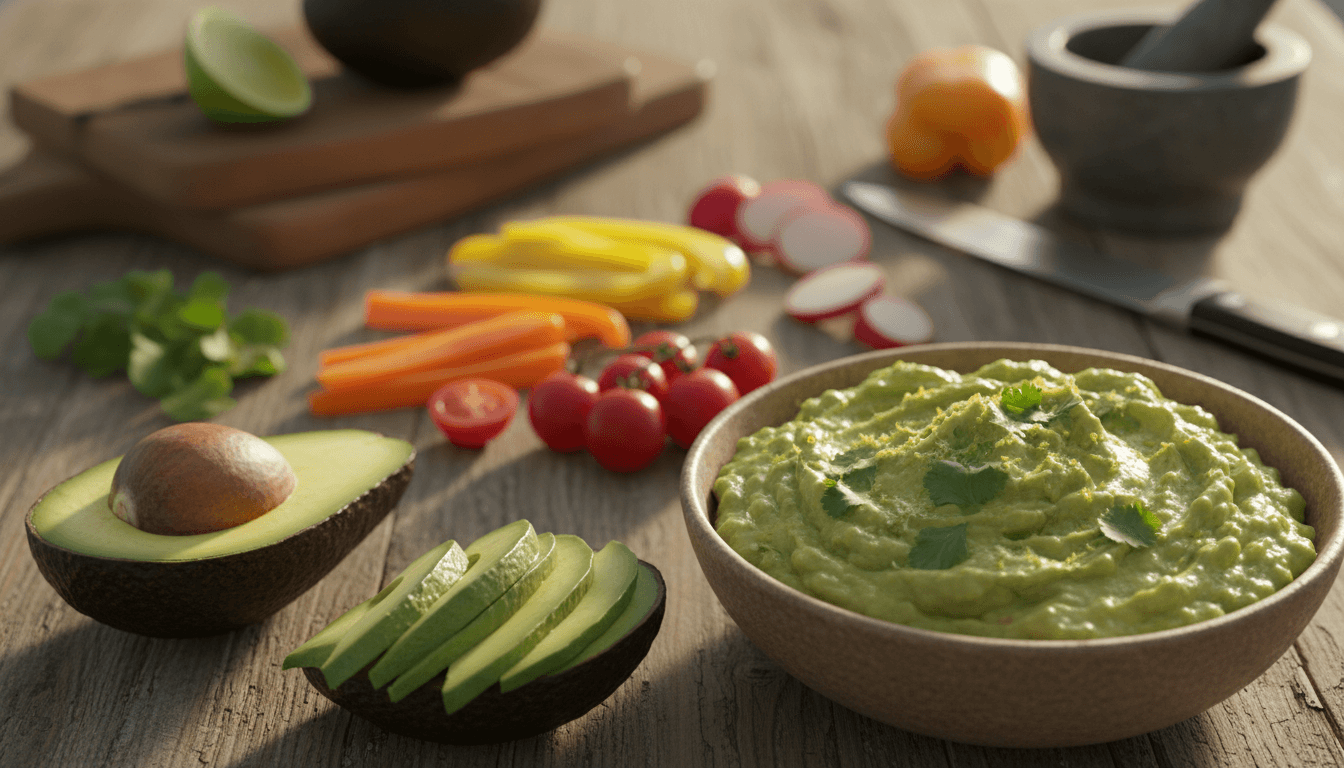
Unlike many dips, guacamole is full of real nutritional value. It’s made with fresh avocados, tomatoes, onions, lime juice, and cilantro. This mix creates a food that’s good for your health in many ways.
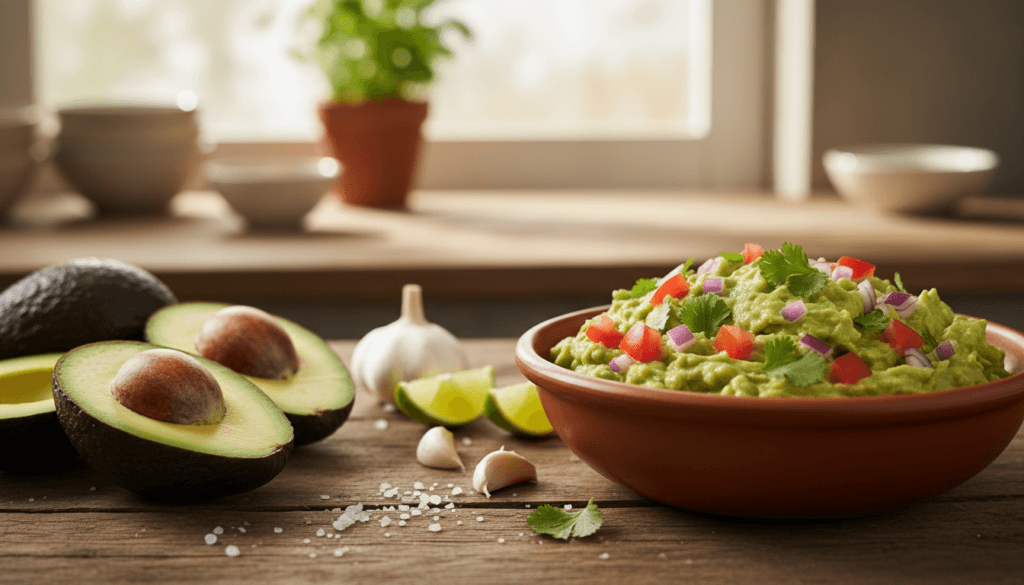
The health benefits of guacamole begin with avocados. They have healthy fats, antioxidants, and nearly 20 vitamins and minerals. These fats help your body absorb vitamins from other foods.
Here’s why guacamole is good for you:
- Heart-healthy monounsaturated fats that support cardiovascular function
- Fiber that aids digestion and keeps you feeling full
- Antioxidants that fight disease and protect your cells
- Vitamins and minerals essential for daily bodily functions
Enjoying guacamole regularly is a smart choice. It’s full of healthy fats and fiber. This makes it a satisfying choice that boosts your overall health.
What’s Inside Your Guacamole Bowl
When you enjoy a bowl of guacamole, you’re getting more than just a tasty dip. Each spoonful is packed with nutrients that support your body in many ways. Knowing the guacamole nutrition facts helps you make smart choices about this favorite food. Let’s dive into what’s happening in that creamy green mix.
Breaking Down the Nutrition Facts
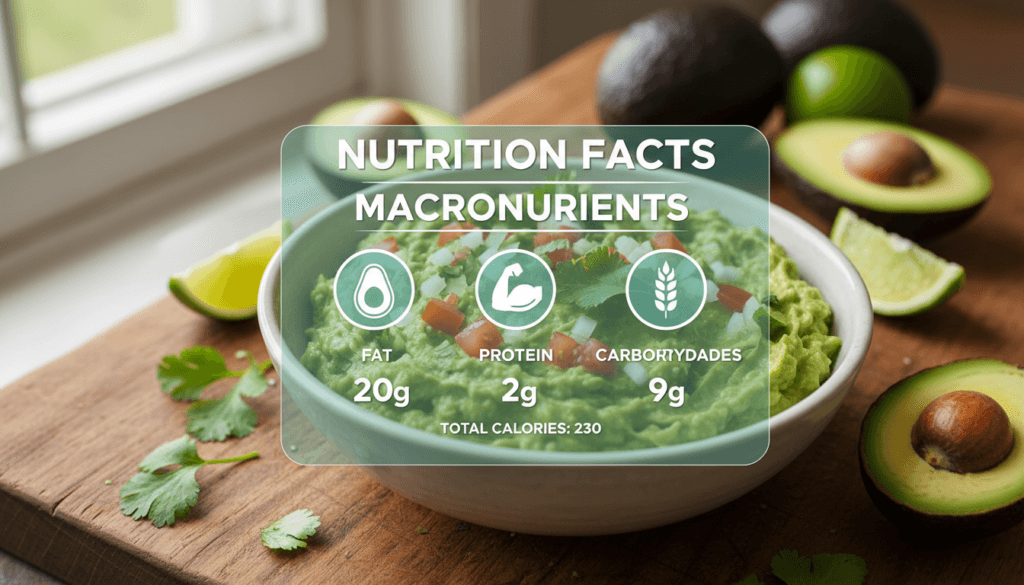
A quarter-cup of guacamole has about 90 calories, making it a good size for snacking or meal prep. The real magic is in the guacamole macros—how those calories are split matters more. You’ll find 8 grams of fat, 5 grams of carbs, and 1 gram of protein in that serving.
The fiber content is exciting. You get 3.7 grams of fiber, which is 13 percent of your daily value. This fiber keeps your digestive system running smoothly and helps you feel full after eating.
Guacamole also has 190 milligrams of sodium, which is about 8 percent of your daily limit. The avocado nutritional value shines with other compounds that boost your health.
Key Vitamins and Minerals in Guacamole
The vitamins in guacamole are impressive for such a small serving. You get 44 micrograms of folate, key for cell growth and energy. This nutrient is crucial if you’re pregnant or planning to be.
You also get a lot of vitamin K, which is good for your bones and blood clotting. The minerals include 272 milligrams of potassium, which helps with blood pressure and heart function. You also get vitamin C for immune support and antioxidants like polyphenols, tocopherols, and carotenoids that fight cellular damage.
| Nutrient | Amount (¼ cup serving) | Daily Value % | Benefit |
|---|---|---|---|
| Folate | 44 mcg | 11% | Cell growth and DNA synthesis |
| Vitamin K | 12 mcg | 10% | Bone health and blood clotting |
| Potassium | 272 mg | 6% | Blood pressure regulation |
| Vitamin C | 6 mg | 7% | Immune system support |
| Fiber | 3.7 g | 13% | Digestive health |
Understanding the Fat Content
Many people get confused about guacamole’s fat content. Yes, it has fat—about 8 grams per quarter-cup serving. But don’t be scared by this number. The healthy fats in guacamole are worth celebrating.
Most of the fat in guacamole is monounsaturated fats, the same heart-protective fats found in olive oil. These fats help lower bad cholesterol and support heart health. They also help your body absorb fat-soluble vitamins like vitamins A, D, E, and K.
- Monounsaturated fats make up the majority of guacamole’s fat content
- These fats keep you feeling full and satisfied longer
- They support brain function and hormone production
- They help reduce inflammation throughout your body
- Only 1 gram of the total fat is saturated fat
Understanding the fat composition in guacamole changes how you view it. The healthy fats in guacamole are something to welcome into your meals.
Guacamole Supports Your Heart Health
Your heart needs the best care, and heart-healthy guacamole is a tasty way to help. Avocados have beta-sitosterol, a plant compound that lowers cholesterol naturally. Eating guacamole regularly protects your heart from disease.
Studies show avocados improve cholesterol levels. Your total cholesterol goes down, LDL decreases, and HDL goes up. This mix is great for a healthy heart.
- Fiber cleans your arteries
- Magnesium helps heart rhythm
- Potassium lowers blood pressure
- Polyphenols prevent artery plaque
Tomatoes in guacamole add extra heart benefits. Avocado’s lutein and tomato’s lycopene are a powerful duo for your heart.
| Cholesterol Type | What It Does | Guacamole’s Effect |
|---|---|---|
| LDL Cholesterol | Clogs arteries (bad) | Decreases |
| HDL Cholesterol | Protects heart (good) | Increases |
| Total Cholesterol | Overall cholesterol level | Lowers |
Avocados have 76 milligrams of beta-sitosterol per 100 grams. This natural compound helps keep cholesterol levels healthy. Potassium in avocados also helps your blood pressure, keeping your heart working well.
Adding heart-healthy guacamole to your meals is a tasty way to improve your heart health. It reduces your risk of heart disease.
How Guacamole Helps You Manage Your Weight
Eating fat doesn’t always mean gaining weight. Guacamole can actually help you manage your weight. It has healthy fats and fiber that make you feel full between meals. This helps you avoid snacking and eating too much during the day.
Guacamole’s nutritional profile is key to understanding its weight management benefits. When you eat it, your body works towards your health and fitness goals.
The Satiety Factor of Healthy Fats
Guacamole is mostly monounsaturated fats, which are good for you. These fats help you feel full for longer. This is because the fat in guacamole slows down how fast your stomach empties.
A 2019 study found that eating a whole avocado at breakfast made people feel full for up to five hours. This was more than those who ate similar breakfasts with less fat and fiber.
- Monounsaturated fats slow stomach emptying
- Satiety can last up to five hours after eating
- You naturally eat less throughout the day
- Blood sugar stays more stable
- Plant-based fats provide antioxidants
Fiber Keeps You Fuller Longer
Guacamole’s fiber content is another reason it helps with weight loss. Each serving has two types of fiber. Soluble fiber slows down digestion, and insoluble fiber helps move food through your system.
These fibers keep you feeling full for longer. This natural control over appetite means you eat less without feeling hungry. Regularly eating avocados also helps reduce dangerous visceral fat around your organs.
| Fiber Type | What It Does | Weight Management Benefit |
|---|---|---|
| Soluble Fiber | Slows digestion and absorption | Keeps blood sugar steady |
| Insoluble Fiber | Adds bulk to digestive content | Promotes regular digestion |
The science is clear. Guacamole supports your weight management journey by combining satiety with fiber benefits. It’s not just a tasty food. It’s a tool that helps your body work more efficiently towards your health goals.
Blood Sugar Benefits You Can’t Ignore
Managing your blood sugar is crucial for your health. Guacamole is a tasty way to help control it. It’s great for those with type 2 diabetes or anyone wanting stable energy.
Avocados, guacamole’s base, have a low glycemic index. This is because they’re full of fiber, not sugar or starch. So, guacamole doesn’t cause the big spikes and drops that other carbs do. Your body absorbs it slowly and steadily.
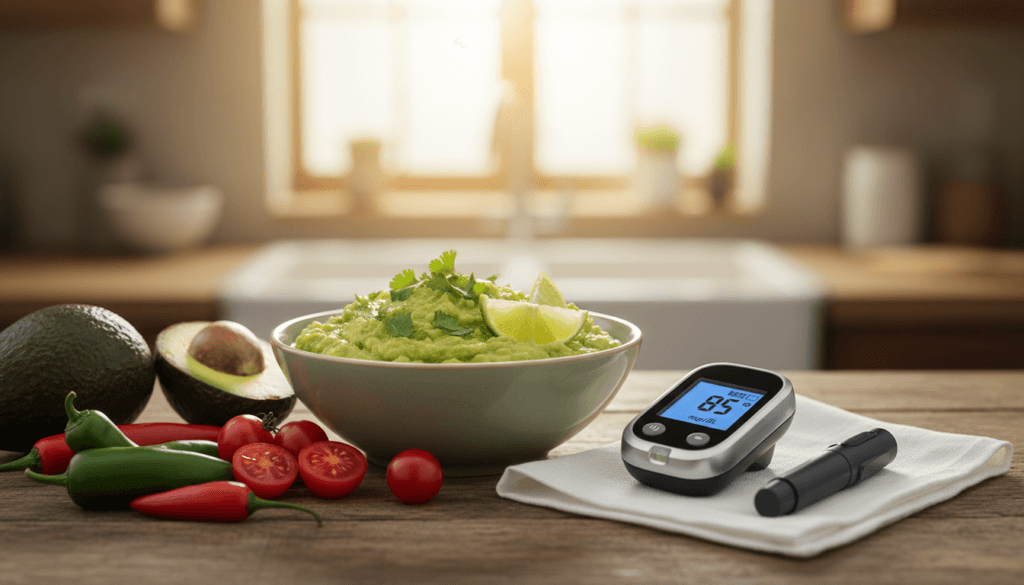
A study by the Hispanic Community Health Study found something amazing. Eating half a cup of avocado daily improves blood sugar and insulin sensitivity. For those with type 2 diabetes, the benefits are even stronger. Adding half an avocado to meals can reduce glucose and insulin spikes.
The healthy fats in guacamole slow down carb breakdown. This keeps your blood sugar steady and prevents energy crashes.
How Guacamole Supports Better Metabolic Health
Guacamole also helps with belly fat reduction. Regular avocado use may decrease dangerous visceral fat. This fat is linked to type 2 diabetes and other serious health problems.
Fiber, healthy fats, low glycemic load, and antioxidants in guacamole support metabolic health. Each part helps keep your energy and blood sugar stable.
| Nutrient | Role in Blood Sugar Control | Amount per Half Avocado |
|---|---|---|
| Fiber | Slows carbohydrate digestion | 6.7 grams |
| Monounsaturated Fat | Reduces insulin resistance | 6.2 grams |
| Potassium | Supports healthy blood pressure | 257 mg |
| Antioxidants | Protects cells from damage | Multiple types present |
The key benefits of guacamole in your diet include:
- Stable energy levels throughout the day
- Fewer cravings and less hunger between meals
- Better insulin sensitivity for your cells
- Lower risk of developing type 2 diabetes
- Reduced belly fat storage
- Improved overall metabolic function
Guacamole is a great choice for blood sugar stability. Enjoy it with veggies, whole grains, or lean proteins for meals that support your health and keep you full.
Guacamole Boosts Your Brain and Eye Health
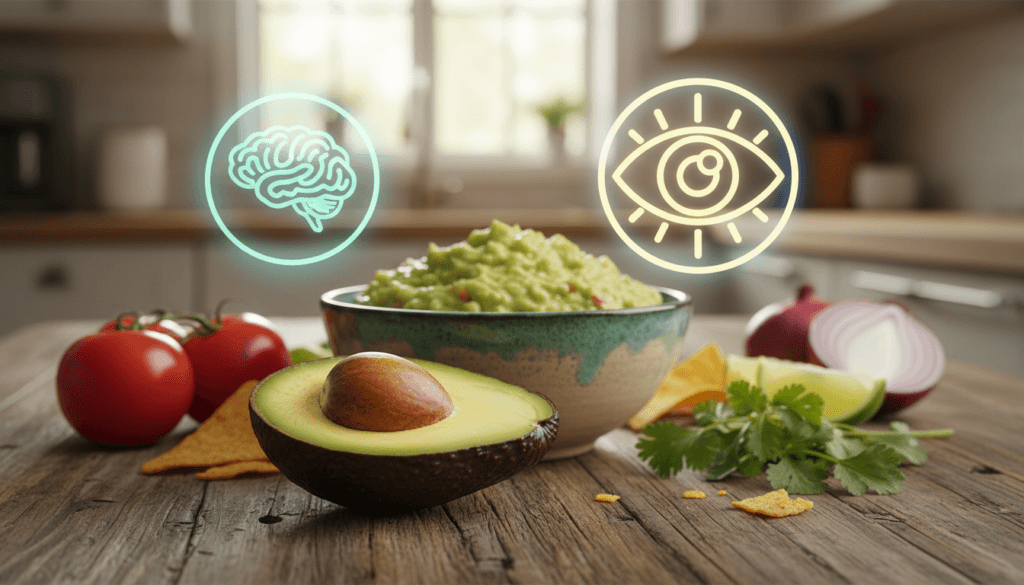
Your brain and eyes are very important. They help you think, remember, and see. Guacamole has nutrients that support them. Avocados have special compounds that help your brain and eyes.
Lutein for Cognitive Function
Lutein is found in avocados. It helps your brain and memory. Studies show that eating avocados can improve memory in older adults.
This is interesting. Lutein in avocados works better than supplements. The healthy fats in guacamole help your body use lutein better. Enjoying guacamole helps keep your brain sharp.
- Lutein enhances memory recall ability
- Healthy fats boost nutrient absorption
- Whole avocados outperform supplements
- Brain tissue concentrates this protective nutrient
Protecting Your Vision with Antioxidants
Your eyes have antioxidants like lutein and zeaxanthin. They protect your eyes from damage. These antioxidants are in your macula, which is key for clear vision.
Eating guacamole boosts your macular pigment. This strengthens your vision and supports eye health. Zeaxanthin in avocados helps prevent age-related macular degeneration.
| Eye Health Component | What It Does | Best Source |
|---|---|---|
| Lutein | Protects macula and supports vision clarity | Guacamole with healthy fats |
| Zeaxanthin | Filters harmful light wavelengths | Avocado-based dishes |
| Monounsaturated Fats | Enhances antioxidant absorption | Fresh guacamole |
| Macular Pigment | Reduces macular degeneration risk | Avocado consumption |
The combination of lutein, zeaxanthin, and healthy fats in guacamole creates a vision-protecting powerhouse. Eating guacamole gives your body these nutrients together. This is better than supplements. Your eye health benefits from guacamole’s nutrients.
Your Gut Will Thank You for Eating Guacamole
Your digestive system is filled with trillions of tiny organisms that affect your health. Guacamole is great for supporting these tiny helpers. The bacteria in your intestines make up your gut microbiome, and what you eat changes them.
A 2020 study in the Journal of Nutrition found amazing results. People who ate half to one avocado daily for 12 weeks saw big changes. Their gut microbiome got better, with more bacteria that helps digest fiber.
The study showed three key benefits for your digestive health:
- Lower bile acid concentrations in stool, showing improved fat digestion
- Greater production of short-chain fatty acids that reduce inflammation
- Strengthened gut lining integrity protecting against digestive problems
Guacamole has about 6-7 grams of fiber per half avocado. This fiber feeds your healthy bacteria. It helps you go to the bathroom regularly, prevents constipation, and gets rid of toxins. The antioxidants in guacamole also protect your intestinal cells.
| Gut Health Benefits | How Guacamole Helps | Daily Recommendation |
|---|---|---|
| Fiber for Digestion | 6-7g per half avocado supports healthy bacteria | ½ to 1 avocado daily |
| Short-Chain Fatty Acids | Reduces inflammation in digestive tract | Regular consumption for 12 weeks shows results |
| Intestinal Health | Strengthens gut lining and protective barrier | Consistent daily intake |
| Gut Microbiome Diversity | Increases beneficial bacteria populations | ½ to 1 avocado daily for optimal benefits |
| Healthy Bacteria Balance | Feeds good bacteria while reducing harmful organisms | 12-week commitment shows measurable changes |
Eating foods like guacamole keeps your gut microbiome healthy. This boosts your immune function, improves nutrient absorption, and strengthens your body’s defenses. A healthy gut microbiome also helps with your mental health and mood. Every bite of guacamole feeds the good bacteria that keeps your gut healthy.
Things to Watch Out For When Eating Guacamole
Guacamole is great for your health. But, it’s important to know a few things to enjoy it safely. Knowing these tips helps you enjoy guacamole without harming your health.
Sodium Content in Store-Bought Versions
Store-bought guacamole can have a lot of salt. Some have more than 10% of your daily sodium in just one serving. This is bad for your blood pressure and heart if you’re watching your sodium.
But, you can control this:
- Read nutrition labels carefully when buying store-bought guacamole
- Choose brands with less than 10% daily value sodium per serving
- Make homemade guacamole at home for complete control
- Use fresh onions, garlic, cilantro, and lime juice for flavor instead of salt
Making guacamole at home is easy. Fresh lime juice and minced onions add flavor without salt.
Portion Control Matters
Guacamole is healthy but has a lot of calories because of its fat. One avocado has over 300 calories. Eating too much can lead to weight gain, even though the fats are good.
Controlling your portions is key:
| Guacamole Serving Size | Calories | Fat Content | Best For |
|---|---|---|---|
| ¼ cup | 90-100 | 8g | Snack or side dish |
| ½ cup | 180-200 | 16g | Main dip portion |
| 1 cup | 360-400 | 32g | Sharing with others |
A good serving size is ¼ to ½ cup per person. This way, you get all the benefits without too many calories. Using portion control helps you enjoy guacamole without overeating.
Also, avocados have vitamin K. This can affect blood-thinning meds like warfarin. If you take these meds, talk to your doctor before eating a lot of guacamole.
By following these tips, you can enjoy guacamole as part of a healthy diet. You’ll stay in control of your health choices.
Conclusion
Adding guacamole to your diet is a smart health choice. This article showed ten ways guacamole benefits your body. It’s good for your heart and brain, offering real nutritional value.
Guacamole’s health benefits are not just marketing. They’re supported by science and experts. Avocados are full of nutrients, making guacamole a great choice.
Is guacamole good for you? Absolutely. It counts as a full cup of vegetables, helping you meet daily veggie goals. You can enjoy it on toast, with eggs, or in tacos.
Guacamole is versatile, making it easy to add to your meals. It’s good for your heart, helps with weight, and improves blood sugar and gut health. These benefits support your overall health.
Minor concerns like sodium in store-bought guacamole and portion size are easy to handle. They shouldn’t stop you from enjoying guacamole. Fresh guacamole is a nutritious choice that nourishes your body.
Every spoonful of guacamole gives you vitamins, minerals, and antioxidants. These protect your eyes, support digestion, and keep your mind sharp. Choose guacamole as your go-to dip and enjoy the health benefits.
FAQ
Is guacamole really healthy, or is it just a delicious indulgence?
Guacamole is truly healthy! It’s made from avocados, which are full of good fats, fiber, and vitamins. Unlike many dips, guacamole is packed with nutrients. It’s made with avocados, tomatoes, onions, lime juice, and cilantro.
These ingredients make guacamole a superfood that supports your health. The healthy fats in guacamole help your body absorb vitamins from other foods. This makes guacamole a great choice for a healthy diet.
How many calories are in a serving of guacamole?
A ¼ cup of guacamole has about 90 calories. Most of these calories come from healthy fats. It also has about 13% of your daily fiber needs.
Guacamole is calorie-dense, but these calories are good for you. They support your overall health, unlike empty calories.
What vitamins and minerals does guacamole contain?
Guacamole is packed with nutrients. It has folate, vitamin K, vitamin C, and potassium. These are important for cell growth, blood clotting, immune function, and blood pressure.
Guacamole also has antioxidants like polyphenols and carotenoids. These fight inflammation and protect your cells. This makes guacamole more nutritious than many other dips.
Is the fat in guacamole bad for my heart?
No, the fat in guacamole is good for your heart. Most of it is monounsaturated fatty acids, like those in olive oil. These fats are heart-healthy.
Research shows that avocados help maintain healthy cholesterol levels. This reduces the risk of heart disease.
Can guacamole really help lower my cholesterol?
Yes, guacamole can help lower your cholesterol. Avocados contain beta-sitosterol, a plant sterol that helps keep cholesterol levels healthy.
Studies show that eating avocados regularly improves cholesterol levels. This includes lower LDL (“bad”) cholesterol and higher HDL (“good”) cholesterol.
Does guacamole help with blood pressure management?
Absolutely! Guacamole is a great source of potassium, which helps lower blood pressure. This is important for people with hypertension or those trying to keep their blood pressure healthy.
The heart-protective compounds in avocados add to guacamole’s benefits. Adding guacamole to your diet can help control blood pressure and support heart health.
Can I eat guacamole if I’m trying to lose weight?
Yes! Guacamole can help with weight management. The healthy fats in guacamole slow down digestion, keeping you full longer.
Research shows that eating half an avocado can boost fullness for up to five hours. This helps prevent unnecessary snacking and overeating.
How does guacamole keep me feeling full longer?
Guacamole’s healthy fats and fiber make you feel full. The monounsaturated fats slow down digestion, creating a feeling of fullness.
A 2019 study found that eating a whole avocado with breakfast made people feel more satisfied. The fiber in guacamole also helps keep you full by slowing digestion and absorption.
Is guacamole safe for people with diabetes?
Guacamole is a great choice for people with diabetes. Avocados have a low glycemic load, meaning they won’t cause blood sugar spikes.
The healthy fats in guacamole slow down carbohydrate digestion. This helps maintain stable blood sugar levels. Research shows that avocado consumption improves blood sugar management and insulin sensitivity.
Does guacamole help stabilize my blood sugar?
Definitely! Adding half an avocado to your meals can help control blood sugar spikes. The fiber, healthy fats, and antioxidants in guacamole support metabolic health.
Regular avocado consumption may also reduce visceral belly fat. This is the dangerous fat that surrounds your organs and increases the risk of type 2 diabetes.
Can guacamole improve brain function and memory?
Yes! Guacamole contains lutein, a compound that supports brain health. Avocados are a rich source of lutein.
Research shows that older adults who ate one avocado daily for six months improved their memory. The unique combination of lutein and healthy fats in avocados boosts brain function in ways supplements can’t.
How does guacamole protect my eyesight?
Guacamole protects your eyes through lutein and zeaxanthin. These antioxidants act like natural sunglasses, protecting your eyes from damage.
Eating guacamole increases the amount of macular pigment in your eyes. This supports clear vision and may reduce the risk of age-related macular degeneration.
What’s the connection between lutein and eye health?
Lutein is a carotenoid that accumulates in the macula, the central part of your retina. It filters harmful blue light and protects retinal cells from damage.
Regularly eating guacamole increases your intake of lutein and zeaxanthin. This builds up protective macular pigment, preserving your vision and reducing age-related decline.
How does guacamole support gut health?
Guacamole is great for your digestive system and beneficial gut bacteria. A 2020 study found that eating half to one avocado daily for 12 weeks improved gut health.
Participants had more beneficial bacteria, better fat digestion, and increased production of short-chain fatty acids. These compounds reduce inflammation and strengthen the gut lining.
What role does fiber play in gut health benefits?
Guacamole’s fiber is key for gut health. It feeds beneficial bacteria, promotes regular bowel movements, and supports detoxification.
The antioxidants in guacamole also protect intestinal cells from damage. This reduces inflammation and supports immune function, mental health, and nutrient absorption.
How does a healthy gut microbiome from guacamole benefit my overall health?
A healthy gut microbiome supports more than digestion. It reduces inflammation, strengthens the immune system, and improves mental health and mood.
It also enhances nutrient absorption and metabolic function. Your gut is the foundation of your overall wellness, and guacamole is a great food for nurturing it.
How much sodium is in store-bought guacamole?
Many pre-packaged guacamoles have high sodium levels. Some have more than 10% of your daily sodium allowance in one serving.
This is a concern for people with high blood pressure or those watching their sodium intake. Always check the nutrition label and choose brands with less than 10% of the daily value for sodium.
How can I reduce sodium in guacamole?
The best way to control sodium is to make your own guacamole. You can use fresh onions, garlic, cilantro, and lime or lemon juice for flavor.
This way, you can dramatically reduce sodium while still enjoying delicious guacamole. Homemade guacamole is healthier and tastes better than most store-bought versions.
What’s the right portion size for guacamole?
A good serving size is ¼ to ½ cup. This size provides all the health benefits without overdoing it.
Remember, guacamole is calorie-dense due to its healthy fats. Being mindful of portion sizes ensures you get the benefits while keeping an eye on your calorie intake.
Does guacamole interact with blood-thinning medications?
Yes, guacamole contains vitamin K, which can affect blood-thinning medications like warfarin. If you take blood thinners, talk to your doctor before eating more guacamole.
Your doctor can help you find a safe and consistent amount to eat. This way, you can enjoy guacamole without worrying about its effects on your medication.
How much guacamole can I safely eat if I take warfarin?
The key is consistency rather than complete avoidance. Your doctor will want you to maintain steady vitamin K intake.
Once you establish a consistent guacamole consumption pattern with your healthcare provider, you can safely enjoy it regularly. The important thing is to communicate with your doctor about your dietary choices and keep your intake predictable.
Is one avocado really a full serving of vegetables?
Yes! One avocado counts as a full cup of vegetables toward your daily recommended intake. This makes guacamole a delicious way to meet your vegetable needs.
Avocados provide not just vegetable servings but are also packed with healthy fats, fiber, and vitamins. Incorporating guacamole into your diet is an efficient way to satisfy your vegetable requirements while gaining exceptional nutritional benefits.
What are the best ways to incorporate guacamole into my daily diet?
You have many delicious options! Spread guacamole on whole-grain toast, mix it into eggs for breakfast, or add it to tacos and burrito bowls.
You can also use it as a burger topping, serve it alongside vegetable sticks for dipping, or blend it into smoothies. Guacamole’s versatility makes it easy to add to virtually any meal, ensuring you reap its benefits regularly.
Can guacamole help reduce inflammation throughout my body?
Absolutely! The antioxidants in guacamole, including polyphenols and carotenoids, fight inflammation throughout your body. The healthy fats in guacamole also support reduced inflammation.
The fiber in guacamole feeds beneficial gut bacteria that produce anti-inflammatory compounds. Chronic inflammation is linked to many health conditions, so eating anti-inflammatory foods like guacamole is important for long-term wellness.
Does guacamole contain polyphenols and other antioxidants?
Yes, guacamole is rich in powerful polyphenols and other antioxidants. These compounds protect your cells from damage, reduce inflammation, and support detoxification.
The combination of antioxidants in avocados provides broader protection than any single antioxidant supplement. This makes whole-food guacamole far superior to isolated nutrient supplements.
How do the nutrients in guacamole work together synergistically?
The nutrients in guacamole work together to provide health benefits. The healthy fats enhance the absorption of vitamins and carotenoids. The fiber feeds beneficial gut bacteria and improves nutrient absorption.
The antioxidants protect cells and reduce inflammation. The minerals support biological processes. This comprehensive nutrient package provides greater health benefits than any single component alone.