Can Dogs Eat Oranges? How To Feed Them The Right Way
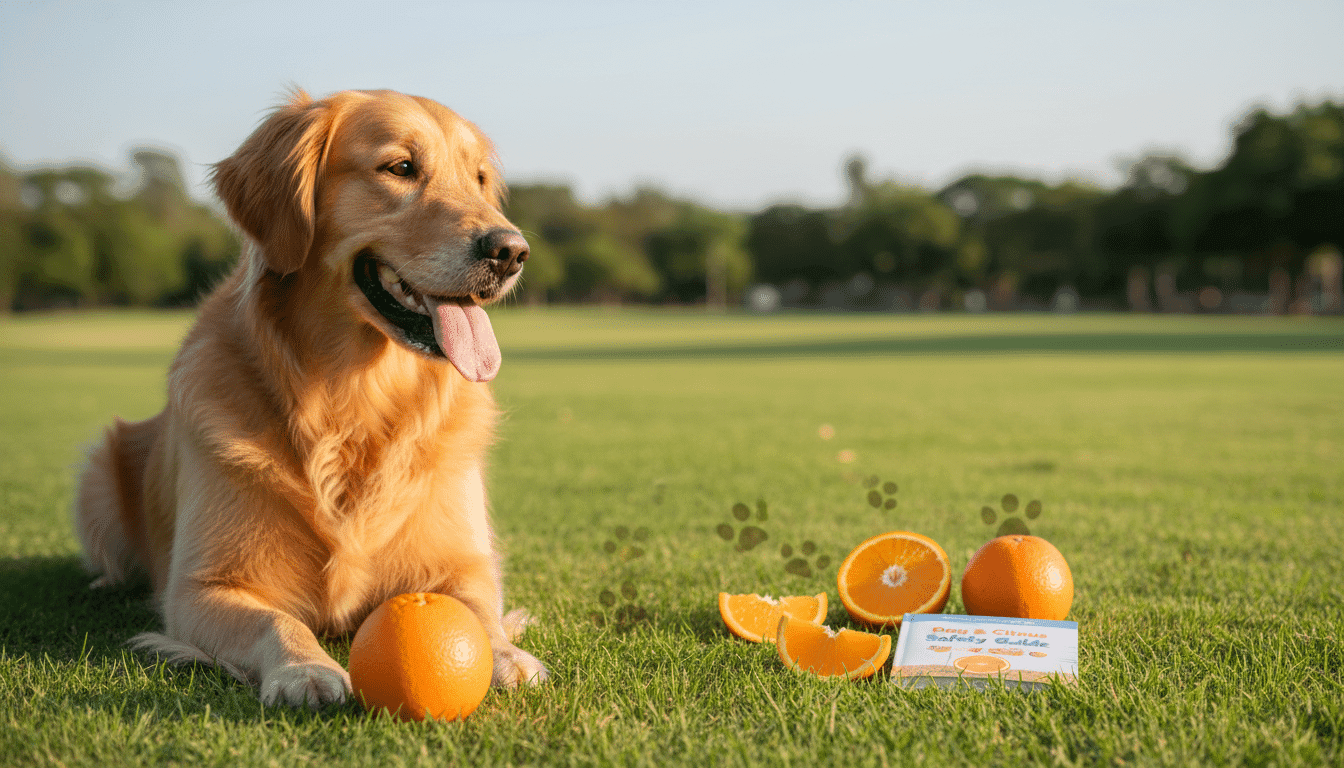
Are oranges safe for dogs? Yes, but with some precautions. Dogs can have oranges in small amounts. But, you need to know how to give them to your dog right.
Some dogs might enjoy the sweet taste of oranges. Others might not care for it. Veterinarians say to prepare oranges carefully for dogs.
The fleshy part of the orange is good for dogs. But, you must take off the peel, seeds, and white pith first. Not all dogs should eat oranges, so check with your vet first.
It’s important to know how to safely give oranges to your dog. Every dog is different. What’s good for one might not be good for another. Always talk to your vet before adding new foods to your dog’s diet.
Key Takeaways
- Oranges are safe for most dogs when served in small quantities
- Remove peels, seeds, and white pith before feeding
- Some dogs may have digestive sensitivities to citrus fruits
- Moderation is key when feeding oranges to dogs
- Veterinary consultation is recommended before introducing new foods
Can Dogs Eat Oranges
Choosing safe fruits for your dog can be hard. Oranges are a tricky choice for citrus safety. It’s important to know which parts are safe and how to feed them.
Understanding Citrus Safety for Your Furry Friend
Dogs can have oranges in small amounts. But, not all parts are safe. Knowing what to give and what to skip is key for your dog’s health.
- Oranges are non-toxic to dogs when given correctly
- Moderation is essential for preventing digestive issues
- Some dogs may have more sensitive stomachs than others
What Parts of the Orange Are Safe
Only the fleshy fruit is safe for dogs. The peel, seeds, and white pith can harm their stomachs.
| Orange Part | Safe for Dogs | Potential Risks |
|---|---|---|
| Orange Flesh | Yes | Low risk when given in small amounts |
| Orange Peel | No | Digestive blockage, potential toxicity |
| Orange Seeds | No | Choking hazard, digestive issues |
| White Pith | No | Difficult to digest, potential stomach upset |
Always take off the peel and seeds before giving your dog a small orange slice. Tiny pieces are best to avoid choking and ensure easy digestion. Watch your dog closely the first time they try oranges to check for any adverse reactions.
The Nutritional Benefits of Oranges for Dogs
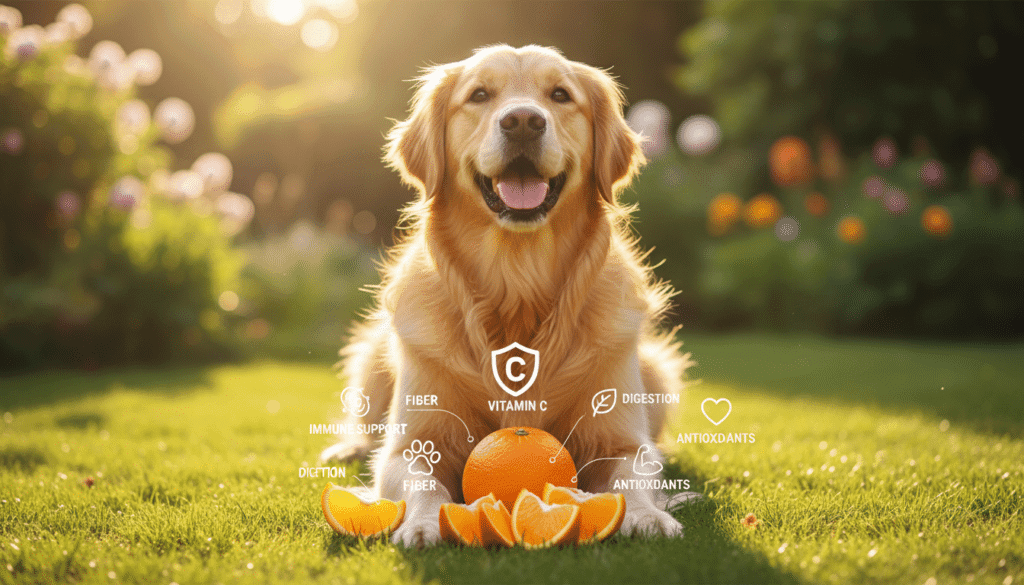
Oranges are more than just a tasty treat for dogs. They offer a range of nutrients that support your dog’s health. These benefits come from giving oranges in small amounts.
Oranges are packed with nutrients that are good for dogs:
- Vitamin C: Boosts the immune system
- Potassium: Helps muscles and nerves
- Dietary fiber: Keeps the digestive system healthy
- Antioxidants: Fight off harmful free radicals
Vitamin C is key for a strong immune system in dogs. The antioxidants in oranges protect cells from damage. This can help reduce inflammation and improve overall health.
| Nutrient | Benefit for Dogs |
|---|---|
| Vitamin C | Immune system support |
| Potassium | Muscle and nerve function |
| Fiber | Digestive health |
| Water Content | Natural hydration |
Remember, oranges are treats, not a main part of your dog’s diet. Their regular food should still be their main source of nutrition. Oranges are low in calories and sodium, making them a healthy snack.
When adding new foods, do it slowly and in small amounts. Watch for any bad reactions. If you’re unsure, talk to your vet about oranges in your dog’s diet.
Vitamin C and Immune System Support
Learning about vitamin C’s role in your dog’s health is important. Dogs have special dietary needs, but vitamin C is key for their wellness and immune system.
How Vitamin C Helps Your Dog’s Health
Vitamin C is a strong antioxidant that helps dogs in many ways:
- It fights off harmful free radicals in your dog’s body
- It helps keep their skin and coat healthy
- It aids in healing wounds
- It reduces inflammation in the body
Vitamin C is vital for your dog’s nutritional needs. It works at the cellular level to protect against oxidative stress. This strengthens your dog’s natural defenses.
Do Dogs Need Extra Vitamin C
Dogs can make vitamin C in their liver, unlike humans. Most healthy dogs make enough on their own. Commercial dog foods usually meet all their nutritional needs.
While extra vitamin C isn’t needed for most dogs, a little from foods like oranges can help. Moderation is key when introducing any new food to your dog’s diet.
Your vet can give advice on vitamin C supplements. They consider your dog’s health and nutritional needs.
Potential Risks and Side Effects of Feeding Oranges

Oranges can be a tasty treat for dogs, but they also come with risks. Pet owners need to know about these risks to keep their dogs healthy.
The main side effects of oranges for dogs include:
- High sugar content that can lead to weight gain
- Potential digestive upset dogs may experience
- Risks associated with orange peels and seeds
Dogs might face issues like diarrhea, gas, and stomach discomfort from oranges. The natural sugars and acidity can be hard on dogs with sensitive stomachs.
| Orange Component | Potential Risk | Recommended Action |
|---|---|---|
| Orange Flesh | Moderate sugar content | Feed in small quantities |
| Orange Peel | Difficult to digest | Remove completely |
| Orange Seeds | Choking hazard | Always remove before serving |
Important note: Dogs with pre-existing digestive conditions or diabetes should avoid oranges. The high sugar content can cause blood sugar fluctuations and health problems.
Start with tiny portions of oranges and watch your dog’s reaction. Look for signs of digestive distress like vomiting or unusual bowel movements. If you see any negative reactions, stop feeding oranges and talk to your vet.
Sugar Content and Dogs with Diabetes
For dogs with diabetes, knowing how sugar affects them is key. Oranges, though good for many, are tough for dogs trying to keep their blood sugar stable.
Dogs with diabetes need a special diet. The sugar in oranges can make their blood sugar levels swing wildly, which is very dangerous.
Managing Blood Sugar Levels in Dogs
Keeping blood sugar in check for diabetic dogs is a big job. Their diet must avoid sudden sugar highs that can harm their health.
- Monitor carbohydrate intake carefully
- Avoid high-sugar fruits like oranges
- Consult veterinarians about specific dietary needs
Why Diabetic Dogs Should Avoid Oranges
Oranges have a lot of natural sugar that can mess with a diabetic dog’s blood sugar. Even a little orange can cause big problems for their metabolism.
| Sugar Content | Impact on Diabetic Dogs |
|---|---|
| High Natural Sugar | Potential Glucose Spike |
| Fructose Level | Metabolic Disruption |
| Caloric Density | Weight Management Challenge |
Pet owners should focus on special diets for diabetic dogs that don’t include high-sugar fruits. Always seek professional veterinary guidance when adjusting your dog’s diet for diabetes.
How Much Orange Can Your Dog Eat Safely
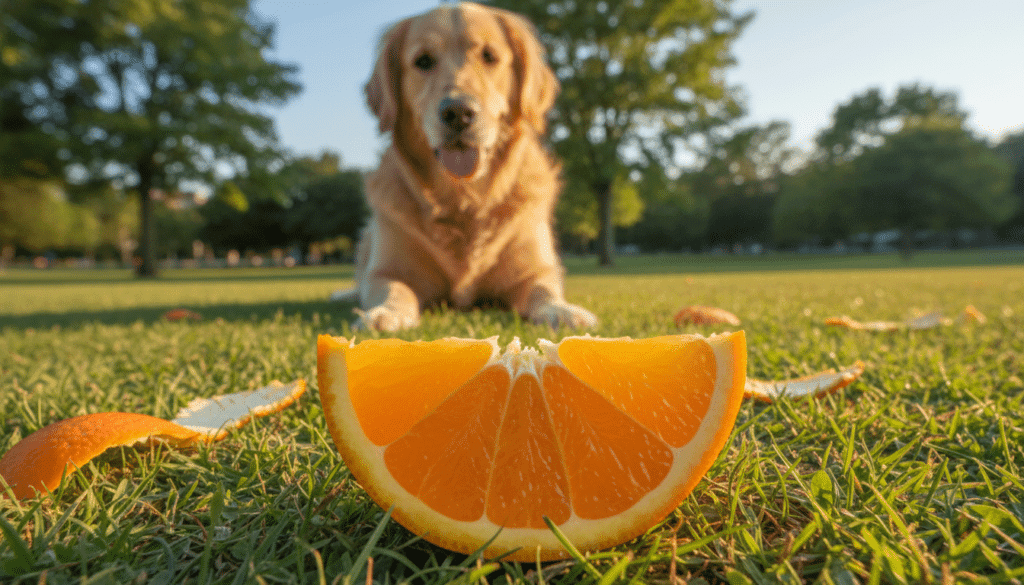
Knowing the right amount of orange for your dog is important for their health. It’s crucial to control portions when adding new treats. Dogs have special dietary needs, and oranges should be seen as an occasional snack, not a full meal.
When thinking about how many oranges dogs can eat, remember the 10% treat rule. Treats, like oranges, should not make up more than 10% of your dog’s daily calories. The other 90% should come from dog food that’s complete and balanced.
Here’s a guide on orange portions for different dog sizes:
- Extra-small dogs (2-10 pounds): 1/2 orange segment, 1-2 times per week
- Small dogs (11-20 pounds): 1 orange segment, 1-2 times per week
- Medium dogs (21-50 pounds): 1 1/2 orange segments, 1-2 times per week
- Large dogs (51-90 pounds): 2 orange segments, 1-2 times per week
- Extra-large dogs (91+ pounds): 2 1/2 orange segments, 1-2 times per week
Begin with small portions when introducing oranges to your dog. Be on the lookout for any digestive problems or allergies. Every dog is different, so keep an eye on how they react and adjust as needed. Always remember, a little goes a long way when giving your dog citrus treats.
Preparing Oranges for Your Dog
Feeding oranges to your dog safely means you need to prepare them right. It’s important to know how to do this to keep your pet healthy and happy.
There are a few key steps to follow for safe and tasty orange serving to your dog.
Removing Peels, Seeds, and Pith
Before you give oranges to your dog, you must take a few important steps:
- Completely remove the orange peel
- Eliminate all seeds
- Strip away the white pith
The peel and pith can upset your dog’s stomach. Seeds are a big choking risk and must be carefully taken out.
Safe Washing and Cutting Techniques
Preparing oranges for dogs is more than just peeling. Here’s how to do it right:
- Wash the orange under cool running water
- Pat dry with a clean paper towel
- Peel the orange completely
- Remove all white membrane and seeds
- Cut into small, bite-sized pieces
The size of your dog matters when cutting oranges. Small dogs need tiny pieces to avoid choking. Larger dogs can handle slightly bigger pieces.
| Dog Size | Recommended Orange Piece Size |
|---|---|
| Small Dogs | 1/4 inch pieces |
| Medium Dogs | 1/2 inch pieces |
| Large Dogs | 3/4 inch pieces |
Safe orange feeding is about careful preparation and not overdoing it. Always introduce new foods slowly and watch for any bad reactions.
Creative Ways to Serve Oranges to Your Dog

Serving oranges to dogs can be fun! You can turn these fruits into tasty, healthy treats. There are many ways to make orange treats for dogs, not just simple fruit pieces.
Here are some fun ways to add oranges to your dog’s meals:
- Frozen KONG Delight: Mix orange pieces with a KONG toy and freeze. It’s a cool, fun treat for hot days.
- Fruit Smoothie Surprise: Blend oranges with bananas and blueberries for a dog-friendly smoothie. Serve it in small amounts or freeze for a cool snack.
- Yogurt Orange Popsicles: Mix chopped oranges with plain yogurt and freeze in ice cube trays. Use a bully stick as a fun popsicle stick!
When making frozen treats, cut oranges into small pieces. This helps prevent choking and makes them easier to eat.
| Serving Method | Preparation Tips | Benefits |
|---|---|---|
| Fresh Segments | Remove seeds and white pith | Quick, simple snack |
| Food Topper | Chop or blend finely | Adds flavor to regular meals |
| Infused Water | Add a few slices, remove after 2-3 hours | Provides subtle citrus flavor |
Start with small amounts of new treats and watch for any signs of upset stomach. Not all dogs like oranges, so watch what your dog prefers and can handle.
Which Dogs Should Avoid Oranges
Not all dogs can safely enjoy oranges. Some have health issues that make citrus fruits risky. Knowing which dogs should avoid oranges helps keep them healthy.
Dogs with Sensitive Stomachs
Dogs with sensitive stomachs face challenges with oranges. The acidity and sugar can upset their stomachs. Look out for these signs:
- Frequent loose stools
- Excessive gas
- Vomiting after eating certain foods
- Chronic digestive discomfort
For dogs with dogs sensitive stomach oranges concerns, a little citrus can upset their stomachs a lot. Conditions like inflammatory bowel disease (IBD) or chronic gastritis make oranges risky.
Overweight and Diabetic Dogs
Overweight and diabetic dogs should avoid oranges too. The sugar in oranges can harm their health:
- Unnecessary calories for weight management
- Potential blood sugar spikes
- Risk of further health complications
If your dog is overweight or diabetic, talk to your vet about safe treats. Your pet’s health and diet are most important.
Can Puppies Eat Oranges

Dealing with a puppy’s diet can be challenging, and oranges are no exception. Oranges can be a special treat for puppies, but you must be careful. Puppies have sensitive stomachs, so introducing new foods needs to be done slowly.
Vets advise caution when giving oranges to puppies. Their young digestive systems might not handle citrus fruits as well as adult dogs do.
- Introduce oranges in tiny amounts
- Remove all seeds and peels completely
- Cut into microscopic pieces
- Watch for any adverse reactions
It’s important to give oranges to puppies in small amounts. Start with a tiny piece, like a pea, and watch them for 24-48 hours. Look out for signs of upset stomach, such as:
- Loose stools
- Vomiting
- Decreased appetite
- Unusual lethargy
| Puppy Orange Feeding Guide | Recommendation |
|---|---|
| Portion Size | 1/4 orange segment or less |
| Frequency | Rare treat, not regular diet |
| Preparation | Remove seeds, peel, cut tiny |
Always talk to your vet before adding new foods to your puppy’s diet. Remember, keeping your puppy’s diet balanced is key, with high-quality puppy food as the main source.
Other Citrus Fruits: What’s Safe and What’s Not
Exploring citrus fruits for dogs is important. You need to know which ones are safe and which to avoid. Not all citrus fruits are good for dogs.
Tangerines, Clementines, and Mandarins: A Closer Look
Tangerines for dogs can be a tasty treat. They are smaller than oranges but offer similar benefits. These fruits are:
- Rich in vitamin C
- Low in calories
- Provide natural antioxidants
- Remove all seeds
- Peel the fruit completely
- Cut into small, manageable pieces
- Serve in very limited quantities
Citrus Fruits to Strictly Avoid
Not all citrus fruits are safe for dogs. Lemons, limes, and grapefruits can upset your dog’s stomach.
| Citrus Fruit | Safety for Dogs | Potential Risks |
|---|---|---|
| Lemons | Unsafe | Extreme acidity, stomach upset |
| Limes | Unsafe | Digestive irritation |
| Grapefruit | Unsafe | Toxic compounds, medication interactions |
The high acid in these fruits can harm your dog’s stomach. Stick to safe citrus fruits like tangerines. Always talk to your vet before adding new foods to your dog’s diet.
Signs Your Dog Has Eaten Too Many Oranges
It’s important for pet owners to know the signs of too much orange eating in dogs. Dogs can get very sick if they eat too many oranges. They need help right away.
Look out for these signs of digestive upset in dogs after eating too many oranges:
- Frequent or watery diarrhea
- Persistent vomiting
- Unusual lethargy
- Loss of appetite
- Abdominal discomfort
Most dogs show signs of stomach trouble when they eat too many oranges. Too much orange eating can cause serious health problems if not watched closely.
| Symptom | Severity Level | Recommended Action |
|---|---|---|
| Mild Diarrhea | Low | Monitor at home, ensure hydration |
| Repeated Vomiting | High | Contact veterinarian immediately |
| Dehydration Signs | Critical | Seek emergency veterinary care |
If your dog shows any of these signs after eating too many oranges, stop giving them oranges right away. Give them fresh water and watch them closely. If the symptoms don’t go away or get worse, you need to see a vet.
It’s better to prevent problems than to treat them. Keep oranges away from your dog. Also, introduce citrus fruits slowly and in small amounts to avoid stomach trouble.
Alternative Healthy Fruits for Dogs
Looking for tasty and healthy fruit treats for your dog? There are many fruits safe for dogs that offer great health benefits. Knowing which fruits are safe and nutritious can help you find new treats for your dog.
Exploring healthy fruit alternatives for dogs means finding fruits that are both tasty and full of nutrients. Let’s look at some great fruit treats that can be a good addition to your dog’s diet.
Safe Fruit Options Beyond Oranges
When picking fruits for your dog, choose ones that are both tasty and good for them. Here are some top picks:
- Bananas: Rich in potassium, easy to digest
- Blueberries: Packed with antioxidants, small training treats
- Apples: Crunchy dental health booster (remove seeds)
- Strawberries: High in fiber and vitamin C
- Watermelon: Hydrating and low-calorie
- Pineapple: Contains beneficial digestive enzymes
Nutritional Benefits of Dog-Safe Fruits
Each fruit has its own special nutritional benefits for your dog. Blueberries are full of antioxidants, while bananas are a good source of minerals. Strawberries add vitamins, and watermelon helps with staying hydrated.
Remember to introduce new fruits slowly and follow the 10% treat rule. These fruits should add to, not replace, your dog’s regular food. Always watch how your dog reacts and talk to your vet about their diet.
By switching between different fruits, you’ll keep treat time fun and full of nutrients for your dog.
Conclusion
Feeding oranges to your dog needs careful thought and responsible pet care. Oranges can be good for them, but they shouldn’t be a main part of their diet. Knowing how to feed oranges helps keep your dog healthy and happy.
When you give oranges to your dog, remember to keep it in small amounts. Make sure to remove the peels, seeds, and pith first. It’s also important to talk to your vet to see if oranges are right for your dog.
Every dog is different, with their own needs and limits. What’s good for one dog might not be good for another. Focus on a balanced diet and see oranges as a special treat now and then. This way, you can give your dog a fun and safe treat that’s good for them.
Your dedication to knowing what’s best for your dog shows you care deeply about them. Keep learning, be careful, and find fun and safe treats for your dog. This will make their diet exciting and enjoyable.